Follow eufisica

Follow eufisica

Showing posts with label moon. Show all posts

Tuesday, July 21, 2015

How the Apollo 11 Moon Landing Worked (Infographic)

How the Apollo 11 Moon Landing Worked (Infographic) NASA's Apollo 11 mission landed the first astronauts on the moon on July 20, 1969. See how it worked.
Source SPACE.com: All about our solar system, outer space and exploration

Thursday, December 6, 2012

GRAIL's Gravity Tour of the Moon

Variations in the lunar gravity field
This image shows the variations in the lunar gravity field as measured by NASA's Gravity Recovery and Interior Laboratory (GRAIL) during the primary mapping mission from March to May 2012.
Credit: 
NASA/JPL-Caltech/MIT/GSFC

The gravitational field of the Moon has been determined by the tracking of radio signals emitted by orbiting spacecraft. The principle used depends on the Doppler effect, whereby the line-of-sight spacecraft acceleration can be measured by small shifts in frequency of the radio signal, and the measurement of the distance from the spacecraft to a station on Earth. Since the gravitational field of the Moon affects the orbit of a spacecraft, it is possible to use these tracking data to invert for gravity anomalies. However, because of the Moon's synchronous rotation it is not possible to track spacecraft much over the limbs of the Moon, and the far-side gravity field is thus only poorly characterized. The gravitational acceleration on the surface of the Moon is 1.6249 m/s2, about 16.7% that on Earth's surface (it means 1/6 of Earth gravity). Over the entire surface, the gravity variation is about is ~0.0253 m/s2 (1.6% of the gravity acceleration). Because weight is directly dependent upon gravitational acceleration, things on the Moon will weigh only 16.7% of what they weigh on the Earth.
Gravity acceleration at the surface of the Moon in m/s2. Near side on the left, far side on the right. Map from Lunar Gravity Model 2011
The major characteristic of the Moon's gravitational field is the presence of mascons, which are large positive gravity anomalies associated with some of the giant impact basins. These anomalies greatly influence the orbit of spacecraft about the Moon, and an accurate gravitational model is necessary in the planning of both manned and unmanned missions. They were initially discovered by the analysis of Lunar Orbiter tracking data, since navigation tests prior to the Apollo program experienced positioning errors much larger than mission specifications.
The origin of mascons are in part due to the presence of dense mare basaltic lava flows that fill some of the impact basins. However, lava flows by themselves cannot explain the entirety of the gravitational variations, and uplift of the crust-mantle interface is required as well. Based on Lunar Prospector gravitational models, it has been suggested that some mascons exist that do not show evidence for mare basaltic volcanism. The huge expanse of mare basaltic volcanism associated with Oceanus Procellarum does not possess a positive gravity anomaly.
fontWikipedia


This movie shows the variations in the lunar gravity field as measured by NASA's Gravity Recovery and Interior Laboratory (GRAIL) during the primary mapping mission from March to May 2012. Very precise microwave measurements between two spacecraft, named Ebb and Flow, were used to map gravity with high precision and high spatial resolution. The field shown resolves blocks on the surface of about 12 miles (20 kilometers) and measurements are three to five orders of magnitude improved over previous data. Red corresponds to mass excesses and blue corresponds to mass deficiencies. The map shows more small-scale detail on the far side of the moon compared to the nearside because the far side has many more small craters. Image credit: NASA/JPL-Caltech/MIT/GSFC

Sunday, August 26, 2012

Neil Amstrong


Photo of Neil Armstrong, July 1969, in space suit with the helmet offNeil A. Armstrong, the first man to walk on the moon, was born in Wapakoneta, Ohio, on August 5, 1930.
As a research pilot at NASA’s Flight Research Center, Edwards, Calif., he was a project pilot on many pioneering high speed aircraft, including the well known, 4000-mph X-15. He has flown over 200 different models of aircraft, including jets, rockets, helicopters and gliders.
Armstrong transferred to astronaut status in 1962. He was assigned as command pilot for the Gemini 8 mission. Gemini 8 was launched on March 16, 1966, and Armstrong performed the first successful docking of two vehicles in space.
As spacecraft commander for Apollo 11, the first manned lunar landing mission, Armstrong gained the distinction of being the first man to land a craft on the moon and first to step on its surface.
Armstrong has been decorated by 17 countries. 

Neil Alden Armstrong (August 5, 1930 – August 25, 2012) was an American astronauttest pilotaerospace engineer, university professor and United States Naval Aviator. He was the first person to walk on the Moon. Before becoming an astronaut, Armstrong was a United States Navy officer and had served in the Korean War. After the war, he served as a test pilot at the National Advisory Committee for Aeronautics High-Speed Flight Station, now known as the Dryden Flight Research Center, where he logged over 900 flights. He graduated from Purdue University and the University of Southern California.
Neil Armstrong Signature.svg
A participant in the U.S. Air Force's Man In Space Soonest and X-20 Dyna-Soar human spaceflight programs, Armstrong joined the NASA Astronaut Corps in 1962. His first spaceflight was the NASA Gemini 8 mission in 1966, for which he was the command pilot, becoming one of the first U.S. civilians in space. On this mission, he performed the first manned docking of two spacecraft with pilot David Scott.

Armstrong's second and last spaceflight was as mission commander of the Apollo 11 moon landing in July 1969. On this mission, Armstrong and Buzz Aldrin descended to the lunar surface and spent 2½ hours exploring, while Michael Collins remained in orbit in the Command Module. Armstrong was awarded the Presidential Medal of Freedom by President Richard Nixon along with Collins and Aldrin, the Congressional Space Medal of Honor by President Jimmy Carter in 1978, and the Congressional Gold Medal in 2009.
On August 25, 2012, Armstrong died in Cincinnati, Ohio, at the age of 82 due to complications from blocked coronary arteries.

Saturday, July 28, 2012

Tuesday, May 22, 2012

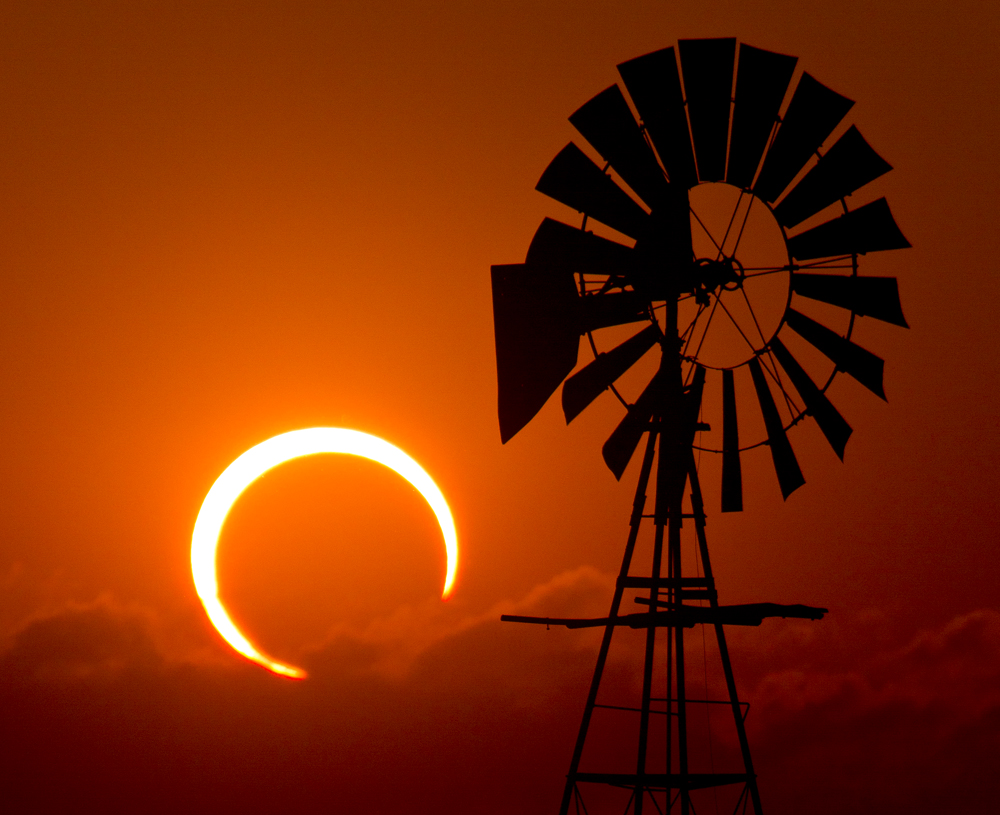
Annular Solar Eclipse, May 2012

Watch this images and videos about the Annular Solar Eclipse occurred last Sunday.

Monday, April 23, 2012

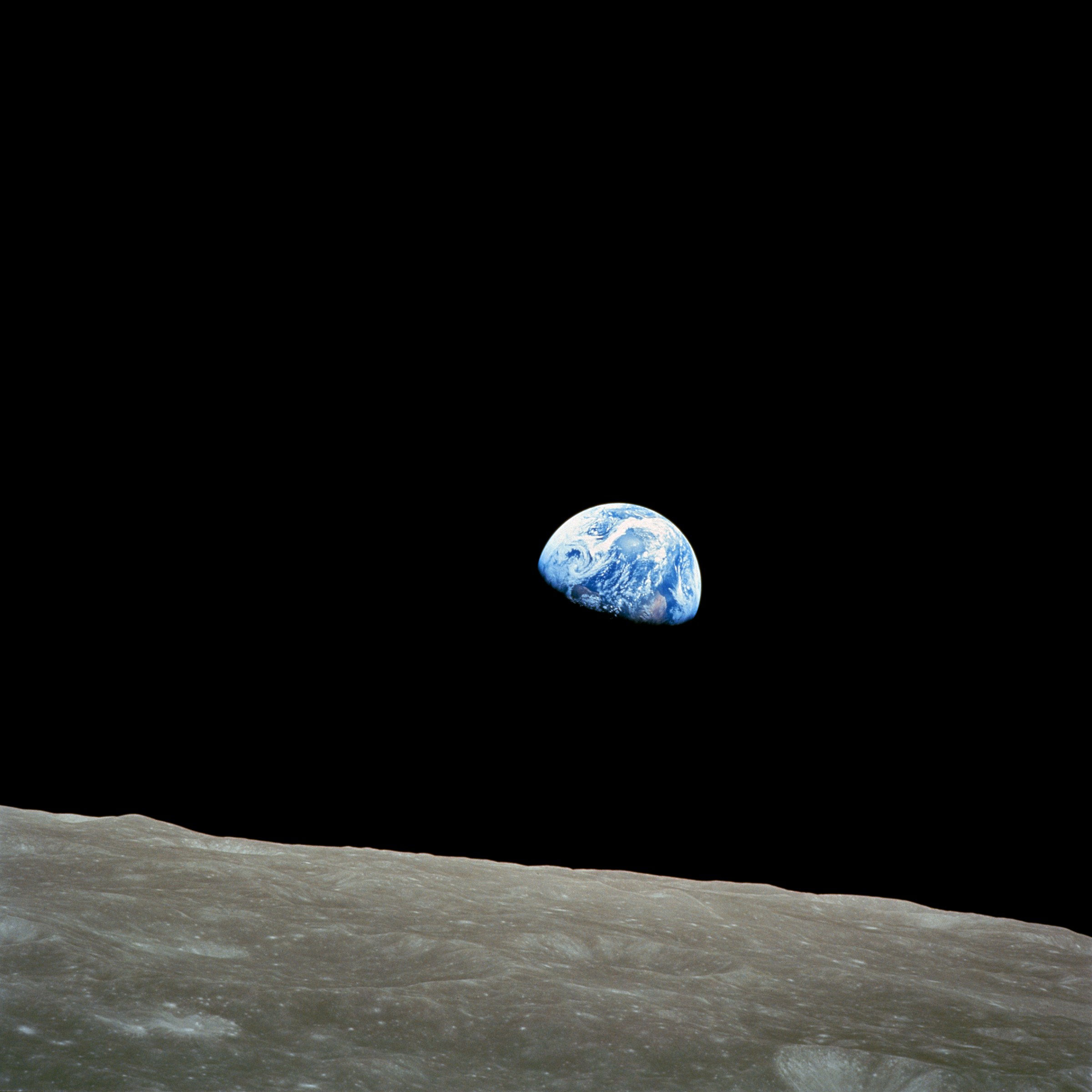
First Earthrise over Moon recreated


In 1968, the crew of Apollo 8 became the first humans to witness and photograph the Earth appearing to rise over the horizon of the moon. 
In 2012, NASA has used data from the Lunar Reconnaissance Orbiter to show the experience in stunning detail. 

Watch the video and click here to get an image in full resolution.


Wednesday, April 4, 2012

Astronomers says Earth has more than one moon

Image credit: PhysOrg


(PhysOrg.com) -- Earth usually has more than one moon, according to a team of astronomers from the University of Helsinki, the Paris Observatory and the University of Hawaii at Manoa.


The population of natural Earth satellites

  • Mikael Granvik, 
  • Jeremie Vaubaillon, 
  • Robert Jedicke
  • Abstract

    We have for the first time calculated the population characteristics of the Earth’s irregular natural satellites (NESs) that are temporarily captured from the near-Earth-object (NEO) population. The steady-state NES size–frequency and residence-time distributions were determined under the dynamical influence of all the massive bodies in the Solar System (but mainly the Sun, Earth, and Moon) for NEOs of negligible mass. To this end, we compute the NES capture probability from the NEO population as a function of the latter’s heliocentric orbital elements and combine those results with the current best estimates for the NEO size–frequency and orbital distribution. At any given time there should be at least one NES of 1-m diameter orbiting the Earth. The average temporarily-captured orbiter (TCO; an object that makes at least one revolution around the Earth in a co-rotating coordinate system) completes (2.88 ± 0.82) rev around the Earth during a capture event that lasts (286 ± 18) d. We find a small preference for capture events starting in either January or July. Our results are consistent with the single known natural TCO, 2006 RH120, a few-meter diameter object that was captured for about a year starting in June 2006. We estimate that about 0.1% of all meteors impacting the Earth were TCOs.

Monday, March 26, 2012

more questions about the origin of the moon

Moon. Photo courtesy of NASA 
(PhysOrg.com) -- It’s beguiled watchers since before records were kept, and today still, it fills poets with pensive musings, and scientists with enchanting questions. Where did the moon come from, and how did it get there? The prevailing view is that a planet named Theia entered out solar system and banged into our planet with sufficient force to push some of the molten material from our planet into orbit. Over time, that material coalesced to form the moon. Now, new research from geophysical scientist Junjun Zhang and colleagues, suggests that such thinking might be wrong. In their paper published in Nature Geoscience, they find that in comparing titanium isotopes from both the moon and the Earth, that the match is too close to support the theory that the moon could have been made partly of material from another planet. 
Video credit and more information in Space.com

Thursday, March 15, 2012

The Evolution of the Moon

The Moon is the only natural satellite of the Earth, and the fifth largest satellite in the Solar System. It is the largest natural satellite of a planet in the Solar System relative to the size of its primary, having a quarter the diameter of Earth and 181 its mass. The Moon is the second densest satellite after Io, a satellite of Jupiter. It is in synchronous rotation with Earth, always showing the same face; the near side is marked with dark volcanic maria among the bright ancient crustal highlands and prominent impact craters. It is the brightest object in the sky after the Sun, although its surface is actually very dark, with a similar reflectance to coal. Its prominence in the sky and its regular cycle of phases have, since ancient times, made the Moon an important cultural influence on languagecalendarsart and mythology. The Moon's gravitational influence produces the ocean tides (read this post) and the minute lengthening of the day. The Moon's current orbital distance, about thirty times the diameter of the Earth, causes it to appear almost the same size in the sky as the Sun, allowing it to cover the Sun nearly precisely in total solar eclipses. (font: Wikipedia)
About the origin of the Moon (Harvard papers): http://ads.harvard.edu/books/ormo/toc.html
Materials for teachers: http://www.lpi.usra.edu/education/resources/s_system/moon.shtml


A great video about the Moon's evolution from NASA (LRO):


Reading of interest:

High-Resolution Simulations of a Moon-Forming Impact and Post-Impact Evolution

Keiichi Wada (1), Eiichiro Kokubo (1), Junichiro Makino (2) ((1) National Astronomical Observatory of Japan, (2) University of Tokyo)
In order to examine the ``giant impact hypothesis'' for the Moon formation, we run the first grid-based, high-resolution hydrodynamic simulations for an impact between proto-Earth and a proto-planet. The spatial resolution for the impact-generated disk is greatly improved from previous particle-based simulations. This allows us to explore fine structures of a circumterrestrial debris disk and its long-term evolution. We find that in order to form a debris disk from which a lunar-sized satellite can be accumulated, the impact must result in a disk of mostly liquid or solid debris, where pressure is not effective, well before the accumulation process starts. If the debris is dominated by vapor gas, strong spiral shocks are generated, and therefore the circumterrestrial disk cannot survive more than several days. This suggests that there could be an appropriate mass range for terrestrial planets to harbor a large moon as a result of giant impacts, since vaporization during an impact depends on the impact energy.
font arXiv [PDF]

Thursday, February 2, 2012

Dark side of the Moon

 A camera aboard one of NASA's twin Gravity Recovery And Interior Laboratory (GRAIL) lunar spacecraft has returned its first unique view of the far side of the moon.


Tuesday, January 24, 2012

Two faces of Titan's dunes

Data from NASA's Cassini spacecraft show that the sizes and patterns of dunes on Saturn's moon Titan vary as a function of altitude and latitude.
(PhysOrg.com) -- A new analysis of radar data from NASA's Cassini mission, in partnership with the European Space Agency and the Italian Space Agency, has revealed regional variations among sand dunes on Saturn's moon Titan. The result gives new clues about the moon's climatic and geological history.
in PhysOrg

Lowest frequency radar echo from the moon

7.4075 Mhz signals from HAARP received by LWA on Oct. 28, 2007, 09:00 UTC. This figure shows the ionospheric reflections and the lunar echos of three of the more than 1400 HAARP pulses received by one of the LWA antennas in New Mexico. Credit: Naval Research Laboratory
"A team of scientists from the Naval Research Laboratory (NRL), the Air Force Research Laboratory’s (AFRL’s) Research Vehicles Directorate, Kirtland Air Force Base, N.M., and the University of New Mexico (UNM) has detected the lowest frequency radar echo from the moon ever seen with earth-based receivers."


LWA Big Blade Antenna. Credit: NRL
The lunar echo measurements at 7.4075 MHZ are believed to be the lowest frequency (longest wavelength) at which bistatic radar measurements have been conducted. "Even though lunar echoes have been detected before at higher frequencies, it was really exciting to see them arrive in real time out under the full moon in the New Mexico desert," says NRL's Hicks.
in NRL

Monday, January 9, 2012

The Tides

The Tidal Force
The tidal force is a secondary effect of the force of gravity and is responsible for the tides. It arises because the gravitational force per unit mass exerted on one body by a second body is not constant across its diameter, the side nearest to the second being more attracted by it than the side farther away. Stated differently, the tidal force is a differential force. Consider three things being pulled by the moon: the oceans nearest the moon, the solid earth, and the oceans farthest from the moon. The moon pulls on the solid earth, but it pulls harder on the near oceans, so they approach the moon more causing a high tide; and the moon pulls least of all on the far oceans (on the other side of the planet), so they stay behind more, causing another high tide at the same time. If we imagine looking at the Earth from space, we see that the whole Earth was pulled, but the near oceans more and the far oceans less; the far oceans stayed behind since they are pulled less (since they are farther away).
in Wikipedia


More information in How Stuff Works


Wednesday, September 7, 2011

we were there


NASA brings to us yesterday a sharper views of Apollo landing sites.


Is anybody out there that still unbelieving that?

Sunday, July 24, 2011

Fourth moon discovered around Pluto

Fourth moon discovered around Pluto - space - 20 July 2011 - New Scientist

Pluto and friends (Image: NASA/ESA/M. Showalter/SETI Institute)
"The Hubble Space Telescope spotted the new moon, which has been designated P4 for the time being. Astronomers estimate it is between 13 and 34 kilometres across. "I find it remarkable that Hubble's cameras enabled us to see such a tiny object so clearly from a distance of more than 3 billion miles [5 billion kilometres]," says Mark Showalter of the SETI Institute in Mountain View, California, who led the observing team.
Three other moons of Pluto were already known. Charon, discovered in 1978, is by far the largest at about 1000 kilometres across. Nix and Hydra,discovered in Hubble images in 2005, are tiny by comparison: both are estimated to be between 32 and 113 kilometres in diameter."
read more in: newscientist.com

Friday, July 15, 2011

Measuring the Earth-Sun distance during a lunar eclipse

Lunar Eclipse. Credit: Fred Espenak


The classical method for measure the Earth-Sun distance is due to Aristarchus and it is based upon the measure of the angle Moon-Earth-Sun when the Moon is exactly in quadrature. [...]
Comments:3 pages, 2 figures. Proc. of "Einstein 120" conference, Kyrgyz State University, 12 September 1999, Bishkek, Kyrghizsthan
Subjects:Instrumentation and Methods for Astrophysics (astro-ph.IM); History and Philosophy of Physics (physics.hist-ph)
Journal reference:"Einstein 120" conference,V. Gurovich ed., Kyrgyz State University, Bishkek, Kyrghizsthan, 2000
Cite as:arXiv:1107.0836v1 [astro-ph.IM]

Thursday, June 16, 2011

Lunar Eclipse

Blood Red Moon Eclipse Over NamibRand Nature Reserve
Credit: George Tucker
Yesterday occurred the Lunar Eclipse. See the photos in space.com

Thursday, July 15, 2010

Solar Eclipse

A total solar eclipse arced across the southern Pacific Ocean Sunday, blotting out the sun and offering stunning views to skywatchers, some of whom ventured to remote islands or rode cruise ships just to see the event. in space.com

As seen from the Earth, a solar eclipse occurs when the Moon passes between the Sun and the Earth, and the Moon fully or partially covers the Sun as viewed from a location on Earth. This can only happen during a new moon, when the Sun and Moon are in conjunction as seen from Earth. font wikipedia

300px-Geometry_of_a_Total_Solar_Eclipse.svg[1]

Image represents a schematic representation of solar system (from wikipedia)

Saturday, September 26, 2009

Moon has more water


"Using a NASA instrument housed on the Indian Chandrayyan-1 satellite, scientists have solved an Apollo-era mystery about water on the moon. The discovery could have profound implications for future human explorers on our nearest celestial neighbor."


image from astrobio.net (click in the link right up to see the full article and images).

Featured Post

IBSE about Light Pollution

Here is my presentation that happened in the Discover the Cosmos Conference (Volos, Greece - 2013). The presentation was an Inquiry Base...

Popular Posts