Follow eufisica

Follow eufisica

Showing posts with label 2020. Show all posts

Monday, February 1, 2021

understanding colors


In this video Neil deGrasse Tyson explains the Physics behind colors.


You can check this lesson, and create a copy from here (if you like it).

Here is another lesson as well (about light pollution):


Wednesday, May 27, 2020

World Data of COVID-19 (updated)


Here are the World Data of the decease COVID-19, provoked by SARS-COV-2 virus (presented in the image above).

The graph on the left presents the ratio of deaths by country. You need to multiply by 100 to obtain the percentage of deaths.
The global percentage (by now) is 6.22%. 
You can filter the information directly in the data.
And this is the graph with the percentage of death people by country:

3rd place is for United Kingdom

Tuesday, April 28, 2020

Experiments @Home

In this times of corona virus, we need to stay at home. 
But, that doesn't mean we can't do some experiments.
Here it is a video to perform some experiments at home:

Monday, April 20, 2020

Let's play @home

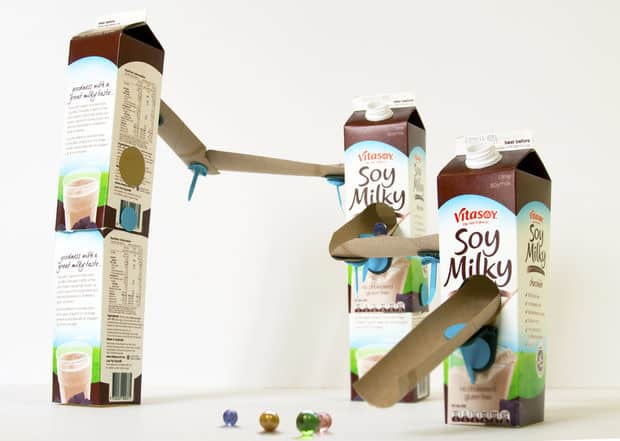
During this days we can play with our children to try to build something like this:


Or you can create an easy one by using cardboard (image source: https://www.hellowonderful.co/post/15-impressive-ways-to-make-a-marble-run/)


Or like this one (image source: https://www.edenproject.com/learn/for-everyone/how-to-make-a-recycled-marble-run)


Let's be creative!

Tuesday, March 31, 2020

A new era of internet?

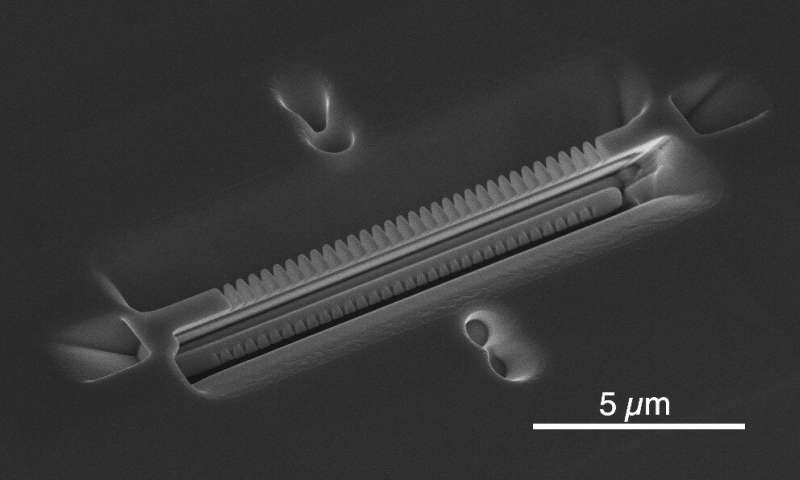
Tiny optical cavity could make quantum networks possible
A nanophotonic cavity created by the Faraon lab. Credit: Faraon lab/Caltech

Well, not yet. But this is a start to connect quantum computers through a quantum network. Development of experiments to connect two quantum bits is the next step. Let's see what reserves in the future.
"Engineers at Caltech have shown that atoms in optical cavities—tiny boxes for light—could be foundational to the creation of a quantum internet. Their work was published on March 30 by the journal Nature. (...) Currently, the team's focus is on creating the building blocks of a quantum network. Next, they hope to scale up their experiments and actually connect two quantum bits, Faraon says."
In phys.org

Monday, March 30, 2020

A new simplified ventilator for COVID-19 patients


Cartlidge ventilator (Courtesy: C Galbiati et al)

Until now, Italy was the country that was most affected by this SARS-COV-2 virus. But science are trying to fight back. A new simplified ventilator was made to treat patients with respiratory difficulty:

"The 26-strong group of physicists from Europe and North America has designed a new, stripped-down mechanical ventilator that it hopes can be mass-produced quickly and cheaply using off-the-shelf components" in Physics World
Physics can help in every situation. Always.

Preprint on arXiv: https://arxiv.org/abs/2003.10405 

Sunday, March 29, 2020

understanding data

World data of SARS-COV-2: http://eufisica.blogspot.com/2020/03/world-data-of-covid-19.html 

Here it is a good video from Minute Physics to understand the data related to COVID-19:


Thursday, March 26, 2020

World data of COVID-19


Follow this to obtain the World data about SARS-COV-2 infections, recovers and deaths.

The data is updated everyday.

Tuesday, March 24, 2020

Physics and COVID-19

Global situation in 2020/03/24 Source: https://gisanddata.maps.arcgis.com/apps/opsdashboard/index.html#/bda7594740fd40299423467b48e9ecf6

Like meteorologists tracking a hurricane, physicists are racing to predict the impact of COVID-19 outbreaks in order to advise policy makers.
"Vespignani points to several approaches developed in physics that are relevant for describing disease spread. One example is the mathematical model that describes diffusion-controlled reactions, in which chemicals spread in a liquid and react upon contact. Another powerful tool is network theory, which represents individuals or clusters of individuals as interconnected nodes, much like train stations on a transit map. The theory can forecast the rate at which an infection spreads through a population based on patterns of human interaction, such as the way people cluster at specific times during the daily commute."
Source: https://physics.aps.org/articles/v13/43

months ahead with SARS-COV-2


This virus could travel to the north (Russia, Canada, ...) in the summer and come back to lower latitudes in the winter.
"The coronavirus pandemic could last over 18 months, according to a 100-page federal government response plan recently shared with The New York Times.
The next year and a half could include "multiple waves of illness," according to the document. "The spread and severity of COVID-19 will be difficult to forecast and characterize."
"

Featured Post

IBSE about Light Pollution

Here is my presentation that happened in the Discover the Cosmos Conference (Volos, Greece - 2013). The presentation was an Inquiry Base...

Popular Posts