Follow eufisica

Follow eufisica

Showing posts sorted by date for query radiation. Sort by relevance Show all posts

Friday, November 13, 2026

This week... in Physics and Astronomy


1. Joint Wide-Precision Exoplanet Spectroscopy (JWST)

  • Topic: Molecular and thermal characterization of atmospheres on exoplanets in the habitable zone (e.g., recent investigations in the K2-18b system).

  • Scientific Rigor: Using transmission spectroscopy with the James Webb Space Telescope (JWST). When the exoplanet transits in front of its host star, some of the starlight passes through the planetary atmosphere. The absorbed wavelengths reveal specific molecular signatures (such as methane, carbon dioxide, and evidence of complex carbon molecules) through intensity minima in the absorption spectra.

  • Curriculum Link (Physics and Chemistry A):

    • Radiation-matter interaction, discontinuous emission and absorption spectra, atomic and molecular energy levels.

  • Status: Confirmed (observational spectral data published and peer-reviewed in journals such as The Astrophysical Journal Letters ), although hypotheses about habitability or the biogenic origin of certain molecules remain preliminary studies and open theoretical models .

  • Educational Application (EUFISICA): Interactive simulation of stellar absorption spectroscopy , where students can cross-reference synthetic spectral lines with blackbody emission data to identify the chemical composition of distant atmospheres.

2. General Relativity on a Microscale with Optical Lattice Clocks

  • Topic: Direct measurement of gravitational redshift at sub-millimeter distances.

  • Scientific Rigor: Using ultra-precise strontium atomic clocks (with uncertainties on the order of 10^{-18} ), researchers were able to measure gravitational time dilation between two points separated by only one millimeter in height. The frequency of the atomic oscillator changes slightly due to the infinitesimal variation in the Earth's gravitational potential, confirming with unprecedented accuracy Einstein's predictions of General Relativity on a microscale.

  • Curriculum Link (Physics and Chemistry A):

    • Gravitational field, gravitational potential energy, and introduction to the principles of Special and General Relativity (time dilation).

  • Status: Experimentally confirmed by international quantum metrology collaborations (published in Nature ).

  • Educational Application (EUFISICA): Virtual laboratory for gravitational time dilation , allowing students to calculate and visualize the time lag between clocks positioned at different altitudes or in varying gravitational fields.

3. Determining Neutrino Mass Limits (KATRIN Collaboration)

  • Topic: Direct, high-precision measurement of the rest mass of the electron neutrino.

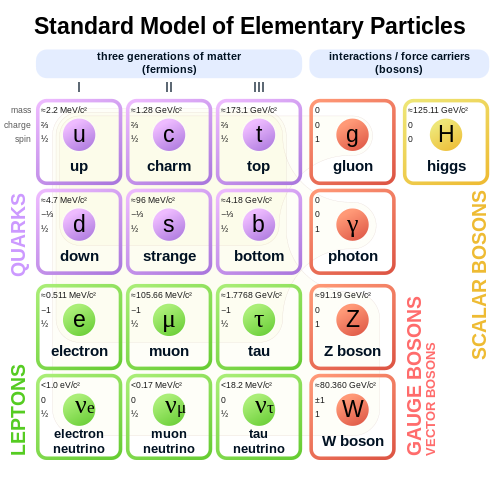
  • Scientific Rigor: The KATRIN ( Karsruhe Tritium Neutrino Experiment ) analyzes with extreme precision the kinetic energy spectrum of electrons emitted in the beta decay of tritium (an isotope of hydrogen). By examining the upper end ("endpoint") of the beta spectrum, the team reduced the upper limit of the neutrino mass to values ​​below $0.8\text{ eV}/c^2$ , imposing severe restrictions on cosmological models of light dark matter and the extension of the Standard Model of Particles.

  • Curriculum Link (Physics and Chemistry A):

    • Nuclear Physics ( β- disintegration ), conservation of energy and linear momentum, mass-energy equivalence ( $E = mc^2$ ).

  • Status: Confirmed (consolidated data published in Physical Review Letters with statistical rigor greater than 5 sigma ).

  • Educational Application (EUFISICA): Stochastic beta decay model with a statistical energy distribution, allowing visualization of the impact of neutrino mass on the final curvature of the electron kinetic spectrum.


Simulations available here:  eufisica - week 001

Friday, April 4, 2014

Crookes' work

A Crookes Tube. Credit: Wikipedia
Crookes made a career of being a meteorologist and lecturer at multiple places. Crookes worked in both the fields of chemistry and physics. The salient characteristic of his work was the originality of the conception of his experiments, and his skill in their execution.
His work on electricity in high vacuum, leads us to cathode rays tubes (the technology behind the creation of television).The Crookes tube is an early experimental electrical discharge tube, with partial vacuum, in which cathode rays, streams of electrons, were discovered. The Crookes tube consists of a partially evacuated glass container of various shapes, with two metal electrodes, the cathode and the anode, one at either end. When a high voltage is applied between the electrodes, cathode rays (electrons) are projected in straight lines from the cathode. It was used by Crookes, Johann Hittorf, Julius Plücker, Eugen Goldstein, Heinrich Hertz, Philipp Lenard and others to discover the properties of cathode rays, culminating in J.J. Thomson's 1897 identification of cathode rays as negatively charged particles, which were later named electrons. 
Crookes tubes are now used only for demonstrating cathode rays.

Crookes radiometer in action. Credit: wikipedia
Another interesting apparatus is the Crookes radiometer, consists of an airtight glass bulb, containing a partial vacuum. Inside are a set of vanes which are mounted on a spindle. The vanes rotate when exposed to light, with faster rotation for more intense light, providing a quantitative measurement of electromagnetic radiation intensity. Today the device is mainly used in physics education as a demonstration of a heat engine run by light energy. 


It is still manufactured and sold as an educational aid or curiosity.
The radiometer is made from a glass bulb from which much of the air has been removed to form a partial vacuum. Inside the bulb, on a low friction spindle, is a rotor with several (usually four) vertical lightweight metal vanes spaced equally around the axis.
The vanes are:
  • polished or white on one side,
  • black on the other.
When exposed to sunlight, artificial light, or infrared radiation (even the heat of a hand nearby can be enough), the vanes turn with no apparent motive power, the dark sides retreating from the radiation source and the light sides advancing.
Cooling the radiometer causes rotation in the opposite direction.
To know more see radiation pressure.
Fonts:
Videos about radiation pressure:

Thursday, November 28, 2013

Comet ISON

Credit: HST
A comet’s journey through the solar system is perilous and violent. A giant ejection of solar material from the sun could rip its tail off. Before it reaches Mars -- at some 230 million miles away from the sun -- the radiation of the sun begins to boil its water, the first step toward breaking apart. And, if it survives all this, the intense radiation and pressure as it flies near the surface of the sun could destroy it altogether.
Right now, Comet ISON is making that journey. It began its trip from the Oort cloud region of our solar system and is now travelling toward the sun. The comet will reach its closest approach to the sun on Thanksgiving Day -- Nov. 28, 2013 -- skimming just 730,000 miles above the sun’s surface. If it comes around the sun without breaking up, the comet will be visible in the Northern Hemisphere with the naked eye, and from what we see now, ISON is predicted to be a particularly bright and beautiful comet.
font: NASA
More info: wikipedia

Monday, August 12, 2013

Google's Doodle celebrates Schrödinger

Today Google celebrates the 126th anniversary of Erwin Schrödinger, with this fantastic doodle:
Doodle do Google para comemorar o 126º aniversário de Schrödinger
Google's Doodle to celebrate the 126th Schrödinger's anniversary.
This Physicist, born in Austria, created the famous wave equation for a quantum system (quantum = packages), that it describes the behavior of particles in a tiny scale. This equation allowed to pass from classical mechanics (continuous energy) to quantum mechanics (discontinuous energy) - initially found in experiments and equations in the study of Planck's blackbody radiation - and the solution presented by Schrödinger, with the Dirac notation, is:
schrodinger equation
“In January 1926, Schrödinger published in Annalen der Physik the paper "Quantisierung als Eigenwertproblem" (Quantization as an Eigenvalue Problem) on wave mechanics and what is now known as the Schrödinger equation. In this paper he gave a "derivation" of the wave equation for time independent systems, and he showed its energy eigenvalues ​​to correct the hydrogenic atom.” Wikipedia
Erwin Schrödinger.jpg
Erwin Schrödinger. Crédito: Wikimedia
In addition to this work, Schrödinger presented other documents that it was also considered of great importance by the scientific community.
Due to this work, especially by his famous equation, Schrödinger received the Nobel Prize in Physics in 1933.

Thursday, July 25, 2013

Black-Body Radiation and Gravity

Blackbody radiation induces attractive force stronger than gravity
Artistic visualization of the interaction between an atom and a Black-Body. Due to the atractive force of the Black-Body, the atom is pulled to the direction of this body. Credit: M. Sonnleitner, et al. ©2013 American Physical Society
The black-body objects are perfect not-reflectors that produce constant radiation when they are at a uniform temperature. Thus, the properties of a black-body depends on its temperature, thinking that this radiation would have a repulsive effect. Now a new, scientists have demonstrated theoretically that black-body radiation induces a second force in atoms and molecules that are near its surface which is attractive and stronger than the repulsive radiation pressure. Consequently, the atoms and molecules are pulled to the surface of the black-body by a force which may be greater than gravity. The new attractive force - what scientists describe as "black-body force" - suggests that a variety of astrophysical scenarios need to be revisited.
blackbody_radn_curves_Swinburne University of Technology
À medida que a temperatura diminui, o pico da curva da radiação de um corpo negro se desloca para menores intensidades e maiores comprimentos de onda.
Scientist identify a few interesting results in their formulation. First, this force decays with the third power of the distance to the black-body (F ∝ 1/r3). Second, it is more stronger for small objects. Third, the force is more stronger for warmer objects. Above a few thousand degrees Kelvin, the force of attraction changes to repulsion.
In their study, scientists demonstrated that the strength of the black-body in a grain of dust, at a temperature of 100 K, is much stronger than the gravitational force in this grain. However, for a massive star at a temperature of 6000 K black-body force is much weaker than the gravitational force.
Scientific Article: M. Sonnleitner, et al. “Attractive Optical Forces from Blackbody Radiation.” PRL 111, 023601 (2013). DOI: 10.1103/PhysRevLett.111.023601

Tuesday, July 16, 2013

Particle Physics (playlist)

Particle physics is a branch of physics that studies the nature of particles that are the constituents of what is usually referred to as matter and radiation. In current understanding, particles are excitations of quantum fields and interact following their dynamics. Although the word "particle" can be used in reference to many objects (e.g. a proton, a gas particle, or even household dust), the term "particle physics" usually refers to the study of the fundamental objects of the universe – fields that must be defined in order to explain the observed particles, and that cannot be defined by a combination of other fundamental fields. The current set of fundamental fields and their dynamics are summarized in a theory called the Standard Model, therefore particle physics is largely the study of the Standard Model's particle content and its possible extensions.
Source: Wikipedia

Watch this playlist about some of this particles:


More educational websites can be found here: http://www.particleadventure.org/other/othersites.html

Wednesday, April 24, 2013

NASA | SDO: Three Years of Sun in Three Minutes


Three years of Sun in three minutes
In the three years since it first provided images of the sun in the spring of 2010, NASA's Solar Dynamics Observatory (SDO) has had virtually unbroken coverage of the sun's rise toward solar maximum, the peak of solar activity in its regular 11-year cycle. This video shows those three years of the sun at a pace of two images per day.
SDO's Atmospheric Imaging Assembly (AIA) captures a shot of the sun every 12 seconds in 10 different wavelengths. The images shown here are based on a wavelength of 171 Angstroms, which is in the extreme ultraviolet range and shows solar material at around 600,000 Kelvin. In this wavelength it is easy to see the sun's 25-day rotation as well as how solar activity has increased over three years.

During the course of the video, the sun subtly increases and decreases in apparent size. This is because the distance between the SDO spacecraft and the sun varies over time. The image is, however, remarkably consistent and stable despite the fact that SDO orbits the Earth at 6,876 miles per hour and the Earth orbits the sun at 67,062 miles per hour.

Such stability is crucial for scientists, who use SDO to learn more about our closest star. These images have regularly caught solar flares and coronal mass ejections in the act, types of space weather that can send radiation and solar material toward Earth and interfere with satellites in space. SDO's glimpses into the violent dance on the sun help scientists understand what causes these giant explosions -- with the hopes of some day improving our ability to predict this space weather.
There are several noteworthy events that appear briefly in this video. They include the two partial eclipses of the sun by the moon, two roll maneuvers, the largest flare of this solar cycle, comet Lovejoy, and the transit of Venus. The specific time for each event is listed below, but a sharp-eyed observer may see some while the video is playing.

00:30;24 Partial eclipse by the moon

00:31;16 Roll maneuver

01:11;02 August 9, 2011 X6.9 Flare, currently the largest of this solar cycle

01:28;07 Comet Lovejoy, December 15, 2011

01:42;29 Roll Maneuver

01:51;07 Transit of Venus, June 5, 2012

02:28;13 Partial eclipse by the moon

More information about this video, as well as full HD version of all four wavelengths and print-resolution stills are public domain and can be viewed and downloaded at: http://svs.gsfc.nasa.gov/vis/a010000/...

This video is public domain and can be downloaded.

Tuesday, April 23, 2013

Max Planck - Born in April 23, 1858


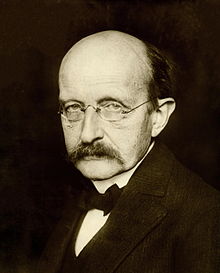
Max Karl Ernst Ludwig Planck, (April 23, 1858 – October 4, 1947) was a German theoretical physicist who originated quantum theory, which won him the Nobel Prize in Physics in 1918.
Max Planck 1933.jpg
Max Planck. Credit: Wikipedia
Planck made many contributions to theoretical physics, but his fame rests primarily on his role as originator of the quantum theory. This theory revolutionized human understanding of atomic and subatomic processes, just as Albert Einstein’s theory of relativity revolutionized the understanding of space and time. Together they constitute the fundamental theories of 20th-century physics. Both have led humanity to revise some of its most cherished philosophical beliefs, and have brought about industrial and military applications that affect many aspects of modern life.
His work on Black Body Radiation was the begging of Quantum Mechanics.

The Planck constant (denoted h, also called Planck's constant) is a physical constant that is the quantum of action in quantum mechanics. The Planck constant was first described as the proportionality constant between the energy (E) of a photon and the frequency (f) of its associated electromagnetic wave. This relation between the energy and frequency is called the Planck relation: E = h f.


"Blackbody radiation" or "cavity radiation" refers to an object or system which absorbs all radiation incident upon it and re-radiates energy which is characteristic of this radiating system only, not dependent upon the type of radiation which is incident upon it. The radiated energy can be considered to be produced by standing wave or resonant modes of the cavity which is radiating. 
From the assumption that the electromagnetic modes in a cavity were quantized in energy with the quantum energy equal to Planck's constant times the frequency, Planck derived a radiation formula. The average energy per "mode" or "quantum" is the energy of the quantum times the probability that it will be occupied:

This average energy times the density of such states, expressed in terms of either frequency or wavelength
gives the energy density , the Planck radiation formula.
Font: HyperPhysics, Wikipedia

Here is a simulation of the Blacbody radiation (PhET)


You can also try this cool simulation from Open Source Physics.

Finally watch this video with a brief History of Quantum Mechanics:


Featured Post

IBSE about Light Pollution

Here is my presentation that happened in the Discover the Cosmos Conference (Volos, Greece - 2013). The presentation was an Inquiry Base...

Popular Posts