In the past, I posted about the Physics of Spiderman 3, Superman.
Today, I present in this blog a paper about Physics and Superheroes.

In the past, I posted about the Physics of Spiderman 3, Superman.
Today, I present in this blog a paper about Physics and Superheroes.
 |
| Standard Model - Source: Wikipedia |
The Standard Model of particle physics is the theoretical framework that describes the fundamental building blocks of the universe and the forces through which they interact. It is one of the most successful and rigorously tested theories in modern physics.
Here is a breakdown of how the universe is put together according to the Standard Model.
All tangible matter in the universe is made up of particles called fermions, which have half-integer spin (e.g., 1/2). These are divided into two main categories, each split into three "generations" of increasing mass.
Quarks are heavy particles that experience the strong nuclear force. They combine to form composite particles called hadrons (like protons and neutrons).
Generation 1: Up (u), Down (d) — These make up ordinary stable matter.
Generation 2: Charm (c), Strange (s)
Generation 3: Top (t), Bottom (b)
Leptons do not feel the strong nuclear force.
Generation 1: Electron (e-), Electron Neutrino (νe)
Generation 2: Muon (μ), Muon Neutrino (νμ)
Generation 3: Tau (τ), Tau Neutrino (ντ)
Note: For every matter particle, there is a corresponding antimatter particle with the same mass but opposite electric charge (e.g., the positron is the antielectron).
Particles interact by exchanging force-carrier particles called gauge bosons, which have integer spin (e.g., 1). The Standard Model accounts for three of the four fundamental forces of nature:
| Force | Description | Gauge Boson (Carrier) | Mass / Range |
| Electromagnetism | Governs atomic structure, light, and chemical reactions. | Photon (γ) | Massless / Infinite |
| Strong Nuclear Force | Binds quarks inside protons/neutrons and holds atomic nuclei together. | Gluon ($g$) | Massless / Short-range |
| Weak Nuclear Force | Responsible for radioactive decay (like beta decay) and initiating solar fusion. | W+ / W- and Z0 Bosons | Very heavy / Ultra short-range |
The Higgs Boson (H) is a scalar boson (spin 0) associated with the Higgs field, which permeates the entire universe.
Mechanism: As fundamental particles move through this field, they interact with it. The strength of this interaction determines the particle's inertial mass.
Particles like the top quark interact strongly and are very heavy; photons do not interact with it at all and remain massless.
Its discovery at CERN's Large Hadron Collider (LHC) in 2012 was the final piece confirming the Standard Model's framework.
While incredibly robust, the Standard Model is known to be an incomplete theory of nature because it fails to explain a few massive cosmological puzzles:
Gravity: It does not include general relativity. The hypothetical carrier of gravity, the graviton, has not been incorporated mathematically into the quantum framework.
Dark Matter & Dark Energy: The model only accounts for about 5% of the energy-mass composition of the observable universe. The remaining 95% is completely unaccounted for.
Neutrino Mass: In the original mathematical formulation of the Standard Model, neutrinos are massless. However, oscillation experiments have proved they possess tiny, non-zero masses.
Matter-Antimatter Asymmetry: It doesn't fully explain why the universe today is overwhelmingly made of matter, even though the Big Bang should have produced equal amounts of matter and antimatter.
This post (from 2010!) explained the Physics behind a fake video.
There wasn't AI to try to explain the phenomenom. But we have it today. So I took all the Physics and put it in a Jupiter file available here: Simulations/helium gum exp.ipynb at main · eufisica/Simulations
By the way, the new website is ready and available here: EUFISICA.


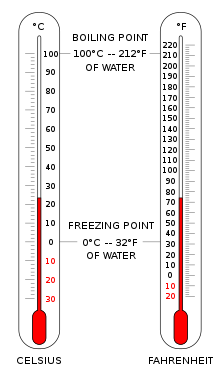
 Fahrenheit is the temperature scale proposed in 1724 by, and named after, the German physicist Daniel Gabriel Fahrenheit (1686–1736). Within this scale, the freezing of water into ice is defined at 32 degrees, while the boiling point of water is defined to be 212 degrees. The temperature scale was replaced by the Celsius scale in most countries during the mid to late 20th century, but it remains the official scale of the United States, Cayman Islands and Belize.
 |
| Credit: uoregon.edu |





"The 26-strong group of physicists from Europe and North America has designed a new, stripped-down mechanical ventilator that it hopes can be mass-produced quickly and cheaply using off-the-shelf components" in Physics World
 |
| World data of SARS-COV-2: http://eufisica.blogspot.com/2020/03/world-data-of-covid-19.html |
 |
| Global situation in 2020/03/24 Source: https://gisanddata.maps.arcgis.com/apps/opsdashboard/index.html#/bda7594740fd40299423467b48e9ecf6 |
"Vespignani points to several approaches developed in physics that are relevant for describing disease spread. One example is the mathematical model that describes diffusion-controlled reactions, in which chemicals spread in a liquid and react upon contact. Another powerful tool is network theory, which represents individuals or clusters of individuals as interconnected nodes, much like train stations on a transit map. The theory can forecast the rate at which an infection spreads through a population based on patterns of human interaction, such as the way people cluster at specific times during the daily commute."Source: https://physics.aps.org/articles/v13/43