Follow eufisica

Follow eufisica

Showing posts with label pollution. Show all posts

Tuesday, March 29, 2016

International Dark Sky Week

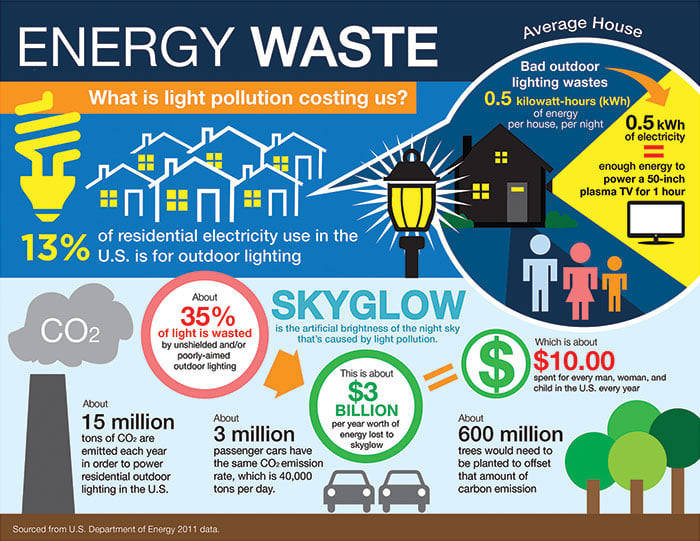
Light Pollution Wastes Energy (Infographic)
International Dark Sky Week (April, 4 to 10) draws attention to the widespread environmental impacts of light pollution and promotes simple solutions to solve it. Learn more about International Dark Sky Week.
In order to help you spread the word about light pollution, the International Dark-Sky Association put together some resources for you. Check back regularly this link for new stuff.

Saturday, February 8, 2014

Plastic pollution

image from: http://europasicewolf.files.wordpress.com/2011/02/ocean-pollution-human-trash.jpg

In this article we can see what happens to the plastic in the Pacific Ocean.

"A "plastic soup" of waste floating in the Pacific Ocean is growing at an alarming rate and now covers an area twice the size of the continental United States, scientists have said."
By Kathy Marks, Asia-Pacific Correspondent, and Daniel Howden in http://www.independent.co.uk/environment/the-worlds-rubbish-dump-a-garbage-tip-that-stretches-from-hawaii-to-japan-778016.html

Animation with the trash vortex along the Pacific Ocean:
http://www.greenpeace.org/international/campaigns/oceans/pollution/trash-vortex?MM_URL=http://oceans..greenpeace.org/en/our-oceans/pollution/trash-vortex


How plastics affects the fauna:
http://www.mindfully.org/Plastic/Ocean/Moore-Trashed-PacificNov03.htm

Saturday, August 31, 2013

IBSE about Light Pollution

Here is my presentation that happened in the Discover the Cosmos Conference (Volos, Greece - 2013).
The presentation was an Inquiry Based Science Education (IBSE) scenario about Light Polution:

You can download the worksheets here: http://portal.discoverthecosmos.eu/en/node/195700

Friday, January 20, 2012

Degradation of the Ozone in the Artic

March 2011: This shows strongly reduced ozone values (left, dark blue) and significantly increased concentration of chlorine monoxide (right, red) that is directly involved in ozone degradation. Credit: Figure: IMK-ASF, KIT
"Extraordinarily cold temperatures in the winter of 2010/2011 caused the most massive destruction of the ozone layer above the Arctic so far: The mechanisms leading to the first ozone hole above the North Pole were studied by scientists of the KIT Institute of Meteorology and Climate Research (IMK). According to these studies, further cooling of the ozone layer may enhance the influence of ozone-destroying substances, e.g. chlorofluorocarbons (CFC), such that repeated occurrence of an ozone hole above the Arctic has to be expected."

All the pollutants are making a really damage to the ozone concentration in the Artic. What happen next? Well, the concentration of ozone will be decrease and raise up the ultraviolet rays in the Artic. Let's face it, we have a problem.

Monday, July 4, 2011

A pause in Global Warming linked to sulfur emissions in China


Global warming pause linked to sulfur in China
"Scientists have come up with a possible explanation for why the rise in Earth's temperature paused for a bit during the 2000s, one of the hottest decades on record.


Sulfur particles in the air deflect the sun's rays and can temporarily cool things down a bit. That can happen even as coal-burning produces the that contributes to global warming.
"People normally just focus on the warming effect of CO2 (carbon dioxide), but during the Chinese economic expansion there was a huge increase in ," which have a cooling effect, explained Robert K. Kaufmann of Boston University. He's the lead author of the study published Monday in ."

in PhysOrg.com

Sunday, June 13, 2010

What went wrong? 10 oil-spill ills


What went wrong? 10 oil-spill ills:


"(...)Here's a quick recap of what went wrong at the wellhead, and what could go wrong in the future:

1. Why did the well explode in the first place? The Deepwater Horizon oil well, 5,000 feet beneath the sea surface, was right between the exploratory drilling phase and its operational phase. Executives from BP and the other companies involved in the drilling told a Senate hearing that heavy drilling mud was removed from the well without putting on a final cement cap. That move has drawn severe criticism, because it reduced downward pressure on the well. Oil and gas blasted up the line on April 20, touching off the initial explosion. The arguments over what the companies did or didn't do in advance of the blast will play a key role in the coming avalanche of lawsuits.


2. Could this rig have been saved? Firefighters worked mightily to put out the blaze, which killed 11 workers. Some have questioned whether the tons of water and fire retardant dumped onto the rig contributed to its sinking on April 22. If the rig could somehow have been saved from sinking, that would have made the job of capping the oil leak much easier. Instead, the rig fell to the bottom of the sea, mangling the riser line that led up from the wellhead.


3. Why didn't the blowout preventer work? The five-story-high contraption known as a blowout preventer, or BOP, was supposed to be the fail-safe option to close off the leaking well. The BOP contains a series of valves that should have closed upon command, or if the oil-and-gas pressure went out of control. Oil executives voiced profound disappointment that it didn't work. So why didn't it? Technology Review points to several reports, issued years ago, that say blowout control measures that are reliable in shallow waters are not so reliable below depths of 3,000 feet or so. This particular BOP might have been damaged by debris during the rig's fall, or it might have been unable to withstand the pressure from this particular well. Even remotely operated vehicles were unable to close down the valves - which suggests that the gush has irreparably damaged the BOP's plumbing. Would a backup BOP have done any good? That's a question to be considered during the crisis postmortem.


4. Why didn't the containment box work? In early May, BP had hoped that a 40-foot-high containment box could be lowered over the well's leaking pipe and suck up the oil and gas. The problem was that the box was too big: The seawater that was trapped within reacted with the methane bubbling up from the leak, forming crystals of methane hydrate. Those crystals essentially plugged up the hose so that oil could not be sucked up ... kind of like the hair that gets stuck in a vacuum-cleaner attachment. What's more, the crystals were lighter than water, which made the box too buoyant to keep clamped over the leaking pipe. In mid-May, BP switched to a different siphoning system that brought up oil from within the broken riser line.


5. What went wrong with the siphon? The four-inch siphoning tube worked, but it could collect only a fraction of the leaking oil - 5,000 barrels a day at best. During the early phase of the oil disaster, some experts thought the total leakage amounted to 5,000 barrels a day. The siphoning operation made it obvious that much more oil than that was getting into the Gulf. To plug the leak completely, BP pinned its hopes on an operation known as 'top kill,' which involved pushing enough heavy drilling mud down the well to counteract the pressure of oil and gas.


6. What went wrong with the top kill? BP pushed the mud down the well for hours at a time, for three days. But the operation could never get enough mud down the hole to keep the oil and gas from gushing back up. The exercise reminded me of trying to unplug a kitchen drain by running tap water down the sink with the garbage disposal on. Gunk just came flooding back up every time they turned off the spigot.


7. Why didn't the junk shot work? One of the extra twists to the 'top kill' maneuver was to throw some extra debris - say, golf balls or strips of rubber - into the drilling mud, in hopes of plugging up the blowout preventer's leaky plumbing. This is what's known as a 'junk shot.' Engineers told The New York Times that the junk shot didn't come close to succeeding, apparently because the debris didn't gum up the works as they hoped. BP set aside the strategy of sealing off the wellhead, and instead tried to suck up the oil using a contraption known as the lower marine riser package, the LMRP, or the 'top cap.'


8. Is the top cap working? Sort of. The top cap doesn't run into the methane-hydrate problems that the containment box did because it closes more tightly over the pipe leading up from the blowout preventer. Less water gets inside the chamber, which provides less opportunity for hydrate crystals to form. Methanol can also be pumped into the cap to retard hydrate formation. To attach the cap, remotely operated vehicles had to saw off the dented riser line - and that part of the operation didn't go as smoothly as hoped. After the saw got stuck, a part of the riser had to be cut off with a giant pair of shears, leaving a jagged edge on the pipe. The cap has four vents to ease the oil/gas pressure while it's being put into place and checked out. So far, only one of the vents has been closed. As a result, lots of oil is still being vented into the sea. BP says progress is being made, with 7,850 barrels of oil being collected over a 12-hour period today. However, experts say cutting off the riser line actually increased the total flow of oil, effectively making things worse ... at least temporarily. Other oil-sucking systems are being put in place, including the Q4000 arrangement that was used for the unsuccessful top kill and a free-floating riser that's designed to ride out hurricane season.


9. Who's in charge, and what have they got? Efforts to contain the oil on the surface are another story entirely, but the main concern here is whether enough resources are being brought to bear. BP is responsible for the cost of the oil cleanup, and over the past few days company executives have said they will 'meet our obligations.' But critics worry that the cleanup hasn't kept up with the threats posed by the spill. Today's report about an undersea plume of oil contamination stretching as far as 142 miles from the spill site raises the level of concern. Alaska marine biologist Rick Steiner, a veteran of the 1989 Exxon Valdez spill response and a longtime critic of the petroleum industry, is worried that the cleanup effort is losing steam. He complained that marine contractors have 'done a terrible job' of tending the containment booms around coastal areas. Disaster fatigue could become more prevalent as the crisis continues.


10. Will the relief wells work? Experts have been saying since late April that the long-term fix for the oil leak depends on the relief wells that are being drilled beneath the seafloor. Those 18,000-foot-deep wells are supposed to intersect with the gushing well, and provide openings for BP to push mud and cement down into the leak. As of Monday, the wells have reached depths of 12,956 feet and 8,576 feet, BP said. The wells are due for completion by August, but there's no guarantee that they'll actually intersect with the original well. Some have compared the job to threading a needle, or finding a needle in a haystack. Last year, after an Australian offshore-oil blowout, it took five attempts to hit the mark. If the Gulf of Mexico situation develops in the same way, that could add weeks upon frustrating weeks to the duration of the disaster."


    Join the Cosmic Log corps by signing up as my Facebook friend or hooking up on Twitter. And if you really want to be friendly, ask me about 'The Case for Pluto.'

    text from http://cosmiclog.msnbc.msn.com/_news/2010/06/08/4482165-what-went-wrong-10-oil-spill-ills


    Wednesday, January 6, 2010

    CO2 to CH4

    English version:

    Japanese researchers announced today that they had discovered a way to turn carbon dioxide (CO2) captured and stored in the soil to methane (CH4), which can help the combat against greenhouse effect and produce natural gas.

    This conversion process is to capture the CO2 underground, using a bacterium, discovered off the northern coast of the large Japanese island of Honshu, on the seabed, to convert CO2 into CH4.
    "The biggest difficulty is to strengthen the bacteria to accelerate the generation of methane," explained a spokesman for the Japanese research agency.
    In its natural state, this transformation will take several thousands of years, but the researchers hope to develop technology to reduce this period to one hundred years. So could become one of the greatest hopes in the fight against global warming.

    imagem ecodebate

    Versão Portuguesa:

    Investigadores japoneses anunciaram, hoje, ter descoberto um meio de transformar o dióxido de carbono (CO2) captado e armazenado no solo em metano (CH4), o que pode ajudar a combater o efeito estufa e a fabricar gás natural.

    Este processo de conversão consiste em capturar o CO2 no subsolo e utilizando uma bactéria, descoberta ao largo das costas setentrionais da grande ilha japonesa de Honshu, no solo oceânico, para converter o CO2 em CH4.
    "A maior dificuldade é reforçar a bactéria para acelerar a geração do metano", explicou um porta-voz da agência de investigação japonesa.
    No seu estado natural, esta transformação demora vários milhares de anos, mas os investigadores esperam desenvolver técnicas que permitam reduzir este período para uma centena de anos. Assim poderá tornar-se numa das grandes esperanças na luta contra o efeito estufa.

    adaptado de SIC online

    imagem ecodebate

    Versión Española:

    Investigadores japoneses anunciaron hoy que habían descubierto una manera de transformar el dióxido de carbono (CO2) capturado y almacenado en el suelo para el metano (CH4), que puede ayudar a combatir el efecto de calentamiento global y producir gas natural.
    Este proceso de conversión es capturar el CO2 al subterráneo, utilizando una bacteria descubierta en la costa norte de la isla japonesa de Honshu, en el hondo del mar, haciendo la conversión de CO2 a CH4.
    "La dificultad más grande es el fortalecimiento de las bacterias para acelerar la generación de metano", explicó un portavoz de la agencia de investigación japonés.
    En su estado natural, esta transformación se llevará a varios miles de años, pero los investigadores esperan desarrollar la tecnología para reducir este período a cien años. Así que podría convertirse en una de las grandes esperanzas en la lucha contra el calentamiento global.

    adaptado de SIC online

    imagem ecodebate

    Friday, March 20, 2009

    CO2 concentration

    English version:

    "Drilling into the rocks off the coast of Antarctica is revealing a more accurate picture of our future climate. That's because about 4 million years ago, carbon dioxide levels in the atmosphere were roughly 400 parts-per-million--a level we're likely to reach again in the next few years. Already, CO2 concentrations in the atmosphere are 386 ppm, up from 280 ppm just two centuries ago." in Scientific American

    This article is related with others, posted in this blog:

    Versão Portuguesa:

    "A cerca de 4 milhões de anos atrás, níveis de dióxido de carbono na atmosfera eram cerca de 400 partes por milhão - um nível que estamos probabilidade de atingir novamente nos próximos anos. Já, as concentrações de CO2 na atmosfera são 386 ppm, contra 280 ppm de apenas dois séculos atrás".  traduzido de Scientific American

    Este artigo está relacionado com os outros, publicadas neste blog:

    ---
    Versión Española:
    "Perforación en las rocas de la costa de la Antártida está revelando una imagen más exacta de nuestro clima futuro. Esto se debe a que cerca de 4 millones de años, los niveles de dióxido de carbono en la atmósfera eran alrededor de 400 partes por millón - un nivel que estamos con probabilidades de llegar de nuevo en los próximos años. Actualmente, las concentraciones de CO2 en la atmósfera son 386 ppm, frente a 280 ppm sólo hace dos siglos". traducido de Scientific American

    Este artículo está relacionado con otros, publicados en este blog:

    Thursday, February 26, 2009

    Global warning: Polar Ice melting faster

    English version:

    In previous information, published in this blog, was knowed that, compared to the 90s, there was an increase in carbon dioxide emissions, with implications for increased global warming. 

    This increase, higher than expected, also influences the melting of the polar circles, during the summer months, as shown in the report of the
    International Polar Year

    This melting will increase the level of the sea, and probably a worsening of weather conditions worldwide. 

    To learn more see the following addresses:
     

    http://www.ipy.org/index.php?/ipy/detail/state_of_polar_research/

    http://www.sciam.com/article.cfm?id=international-polar-year 

    ----------------------------------------------------------------------------------------------------

    Versão em Português:

    Em informações anteriores, publicadas no blog, deu-se a conhecer o facto de que, comparativamente à década de 90, há um aumento das emissões de dióxido de carbono, com implicações no aumento do aquecimento global.

    Este aumento, maior do que o esperado, influencia também o degelo dos círculos polares, durante os meses de verão, como se pode ver no relatório do Ano Polar Internacional.

    Este degelo implicará um aumento dos níveis das águas do mar e, provavelmente, um agravar das condições climatéricas a nível mundial.

    Para saber mais consulte os seguintes endereços:

    http://www.ipy.org/index.php?/ipy/detail/state_of_polar_research/

    http://www.sciam.com/article.cfm?id=international-polar-year 

    http://sic.aeiou.pt/online/noticias/vida/especiais/alteracoes+climaticas/Gelo+nos+polos+norte+e+sul+a+derreter+mais+depressa+do+que+previsto.htm

    ----------------------------------------------------------------------------------------------------

    Versión en Español:

    En la información anterior, publicado en el blog, se escribió que, en comparación con la década de los 90, hay un aumento en las emisiones de dióxido de carbono, con implicaciones para aumentar el calentamiento global. 

    Este aumento, superior al esperado, también influye en la fusión de los círculos polares, durante los meses de verano, como se indica en el informe del Año Polar Internacional

    Esta fusión aumentará el nivel del mar, y probablemente un empeoramiento de las condiciones meteorológicas en todo el mundo. 

    Para obtener más información consulte las siguientes direcciones: 

    http://www.ipy.org/index.php?/ipy/detail/state_of_polar_research/

    http://www.sciam.com/article.cfm?id=international-polar-year 

    Sunday, February 15, 2009

    Climate warming gases rises faster than expected

    Image and another article from www.newscientist.com


    English version

    USA Today: Despite widespread concern over global warming, humans are adding carbon to the atmosphere even faster than in the 1990s, researchers warned Saturday.

    Carbon dioxide and other gases added to the air by industrial and other activities have been blamed for rising temperatures, increasing worries about possible major changes in weather and climate.

    Carbon emissions have been growing at 3.5% per year since 2000, up sharply from the 0.9% per year in the 1990s, Christopher Field of the Carnegie Institution for Science told the annual meeting of the American Association for the Advancement of Science.

    "It is now outside the entire envelope of possibilities" considered in the 2007 report of the International Panel on Climate Change, he said.

    Publicado por Physics Today el 15 de Febrero, 2009 3:45 PM | Enlace 

    Postado por Physics Today em Fevereiro 15, 2009 3:45 PM | 

    Saturday, August 30, 2008

    Plastic pollution - Poluição do plástico

    A poluição dos plásticos no Oceano Pacífico. Uma camada de plástico vagueia no Oceano Pacífico estendendo-se desde o Hawaii até ao Japão.
    Consulte o artigo (em inglês) nas hiperligações indicadas.

    In this article we can see what happens to the plastic in the Pacific Ocean.

    "A "plastic soup" of waste floating in the Pacific Ocean is growing at an alarming rate and now covers an area twice the size of the continental United States, scientists have said." By Kathy Marks, Asia-Pacific Correspondent, and Daniel Howden

    http://www.independent.co.uk/environment/the-worlds-rubbish-dump-a-garbage-tip-that-stretches-from-hawaii-to-japan-778016.html

    Animation with the trash vortex along the Pacific Ocean:
    http://www.greenpeace.org/international/campaigns/oceans/pollution/trash-vortex?MM_URL=http://oceans..greenpeace.org/en/our-oceans/pollution/trash-vortex

    How plastics affects the fauna:
    http://www.mindfully.org/Plastic/Ocean/Moore-Trashed-PacificNov03.htm

    Featured Post

    IBSE about Light Pollution

    Here is my presentation that happened in the Discover the Cosmos Conference (Volos, Greece - 2013). The presentation was an Inquiry Base...

    Popular Posts