
FisAstEE is a Portuguese Science Outreach project related to Physics and Astronomy activities with the target group the parents of children in primary schools.
The project can be found in Facebook, and in the Website.
#fisastee


 If you want to engage your students in Physics and Astronomy (thinking in space careers), you can use this two videos to do so.

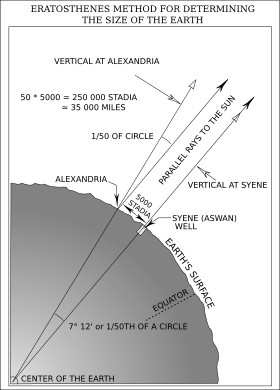 |
| Source: wikipedia |


A message from my friend Rosa Doran:
"Book these dates in your callendar:
September 1st to 5th - GTTP international training
September 8th to 12th - GHOU2014 / Astronomy Education Alliance Meeting
This year our anual meeting (Global Hands-on Universe 2014) will take place in Portugal. This time the meeting is in partnership with some major events. The event will take place in parallel with the Europlanet Science Congress 2014 and in the framework of a major Astronomy Education event: The Astronomy Education Alliance Meeting. The aim is to set the stage to discuss the latest innovative efforts in astronomy education, allowing teachers, educators and outreach professionals to combine efforts and focus astronomy resource production on cross cultural curricula utilizing formal education best practices.
You can find all information regarding the meeting here: http://handsonuniverse.org/astroeducation/
As already is our tradition we will be hosting during the week before this major event, the GTTP international training. There are special conditions for people willing to attend this training session. All the information can be found here: http://gttp.ea.gr
We hope that you will join us in this event. We promise this will be an unforgetable experience in sunny Portugal. Some nice surprises are here waiting for you. Please join and spread the word."
I hope you can join us :)

 | The image of the Solar System was made using real images of the planets. It is not to scale; the Solar System is so large with respect to the size of the planets, that to fit it on the screen, the planets would have to be small dots. Thus, some artistic license is involved. However, the planets are in the correct order. Also shown is comet Hale-Bopp, photographed by the author. |
real in modelEarth's width 8,000 miles 8/100 inch Sun's width 800,000 miles 8 inches therefore scale is 100,000 miles 1 inch therefore 3,600,000 miles 36 inches or 1 yard and Sun-Earth distance 93,000,000 miles 26 yards
Read more: http://www.noao.edu/education/peppercorn/pcmain.html
Mercury is only 0.39 astronomical units from the Sun, while Jupiter orbits at a distance of 5.5 astronomical units. And Pluto is way out there at 39.2 astronomical units.That’s the equivalent of 5.9 billion kilometers.If you could drive your car at highway speeds, from the Sun all the way out to Pluto, it would take you more than 6,000 years to complete the trip.Read more: http://www.universetoday.com/104486/how-big-is-our-solar-system/#ixzz2wAOQhPOD

Jupiter’s most recognisable feature is the Great Red Storm – This is a storm that has been raging for at least 350 years and is large enough for two Earths to fit inside of.
Jupiter’s larger moon Ganymede is the largest moon in the solar system – It’s has a diameter of 5,268 km making it larger than the planet Mercury.
Jupiter had two rings – These are thought to be composed of material from it’s moons where they have been struck by meteorites.
We investigate the behavior of dark energy interacting with dark matter and unparticle in the framework of loop quantum cosmology. In four toy models, we study the interaction between the cosmic components by choosing different coupling functions representing the interaction. We found that there are only two attractor solutions namely dark energy dominated and dark matter dominated Universe. The other two models are unstable, as they predict either a dark energy filled Universe or one completely devoid of it.Notes on dark energy interacting with dark matter and unparticle in loop quantum cosmology. (arXiv:1107.1558v1 [physics.gen-ph])


