Follow eufisica

Follow eufisica

Showing posts with label ESA. Show all posts

Saturday, February 20, 2021

Rover Perseverance and Jezero's Crater

Perseverance first photography of landed site. Credit: NASA/JPL


The Mars' rover, Perseverance, landed and it started to photograph the landscape of Jezero's crater site.

You can check an interactive map of the site here: https://www.esa.int/Science_Exploration/Space_Science/Mars_Express/An_interactive_map_to_explore_Jezero_crater

Or check this video made by ESA/DLR/FU Berlin:

Thursday, October 13, 2016

Alessandro Cozzani: Lights, cameras, action for satellite testing

Mars arrival orbits

This animation shows the relative orbital paths of ESA's ExoMars Trace Gas Orbiter (TGO), the Schiaparelli Entry, descent and landing 


Friday, September 23, 2016

Monday, September 5, 2016

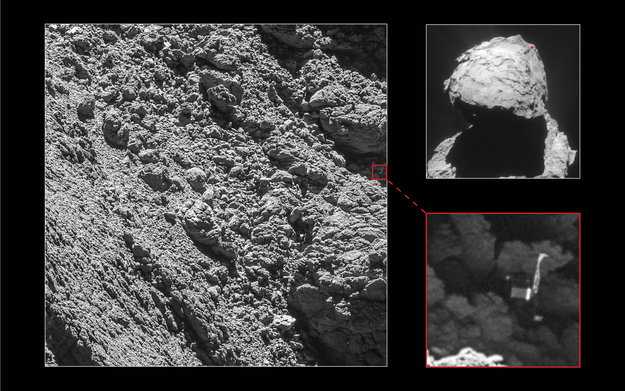
Philae found

Image credit: ESA


"Less than a month before the end of the mission, Rosetta’s high-resolution camera has revealed the Philae lander wedged into a dark crack on Comet 67P/Churyumov–Gerasimenko." (font: ESA)

Wednesday, November 12, 2014

Philae landing

Philae landing confirmation expected at 16:00 UTC.

Watch live:

Monday, November 10, 2014

Rosetta live online

Wednesday you can follow the online emission here: http://www.opendiscoveryspace.eu/news/rosetta-rendezuous-comet-697664
It will be a very important day, Philae will be landind on comet 67P/Churyumov–GerasimenkoThe lander is expected to achieve the first controlled touchdown on a comet nucleus. Its instruments should obtain the first images from a comet's surface and make the first in situ analysis to find out what it is made of.

Image credit: ESA


Tuesday, July 16, 2013

Fly through Hebes Chasma

Screenshot from the video showing where Hebes Chasma is located on Mars. Via ESA.

Read more: universetoday
"Glide through part of the largest canyon on Mars, Valles Marineris, in this stunning colour movie from ESA’s Mars Express. Valles Marineris is not just the largest canyon on Mars, but at 4000 km long, 200 km wide and 10 km deep it is the largest in the entire Solar System. The movie focuses on an enclosed 8 km-deep trough in the northern most part of Valles Marineris, called Hebes Chasma." source: ESA
Watch the video:


Loading...

Friday, April 19, 2013

A whole new view of the Horsehead Nebula


In this episode of the Hubblecast celebrates 23 years of the NASA/ESA Hubble Space Telescope, by unveiling a beautiful and striking new image of the Horsehead nebula. 

Dr Joe Liske (aka Dr J) explains the secrets of nebulae, cosmic clouds of gas and dust that have been the subjects of some of Hubble's most striking astronomical images. The Horsehead nebula is one of the most distinctive, and is now shown in a whole new light thanks to a stunning new infrared image — revealing the delicate wisps of gas that are normally hidden by the thick dust that makes up the Horsehead's famous and familiar shape.

More information and download-options:

Credit: ESA/Hubble


Friday, July 8, 2011

The Rho Ophiuchi Star Formation Region revisited by ESO

The Rho Ophiuchi Star Formation Region revisited by ESO: (follow the link for the full article and full resollution pictures)
The Rho Ophiuchi Star Formation Region revisited by ESO
Credit: ESO/S. Guisard (www.eso.org/~sguisard)

Thursday, June 16, 2011

Centaurus A by Hubble


Image Credit: Image credit: NASA, ESA, and the Hubble Heritage (STScI/AURA)-ESA/Hubble Collaboration. Acknowledgment: R. O’Connell (University of Virginia) and the WFC3 Scientific Oversight Committee
See articles here and here.

Wednesday, February 16, 2011

Astromy Magazine by ESA

Now ESA launch a magazine totally free of charge! Under the Creative Commons License.
You can read the Astronomy for the People Magazine here:

Wednesday, January 26, 2011

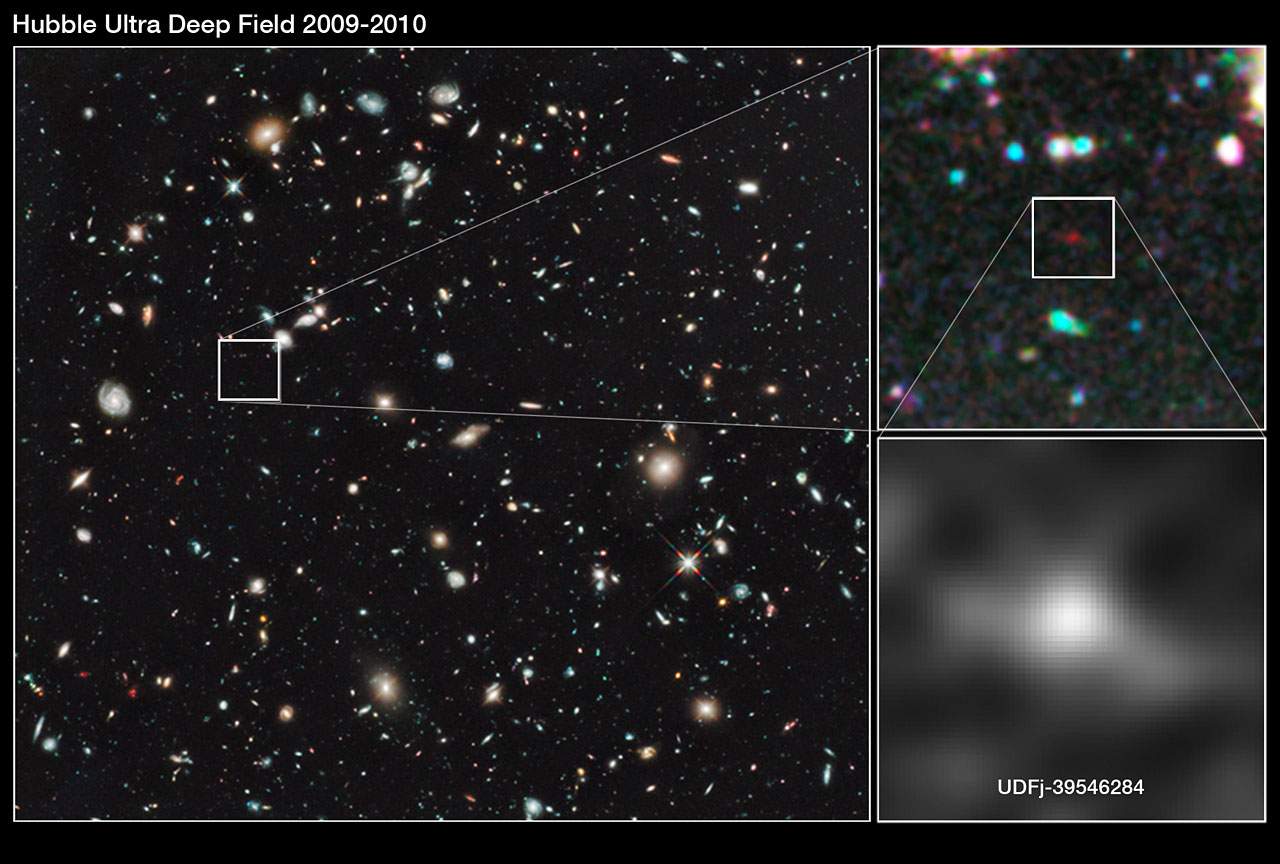
Farway Hubble's picture from space


(Click the link above for full reading)


[PT] O Telescópio Espacial Hubble foi empurrado para o limite de sua capacidade técnica. Resultado de uma colaboração internacional entre vários astrónomos, descobriu-se a galáxia mais distante e antiga  vista, cuja luz levou 13,2 bilhões anos para chegar até nós (um redshift de cerca de 10).
[ES] El Telescopio Espacial Hubble ha sido empujado hasta el límite de su capacidad técnica. Resultado de una colaboración entre varios astrónomos, se descubrió la galaxia más distante y de edad jamás visto, cuya luz viajó 13200000000 años para llegar (un corrimiento al rojo de alrededor de 10).

Featured Post

IBSE about Light Pollution

Here is my presentation that happened in the Discover the Cosmos Conference (Volos, Greece - 2013). The presentation was an Inquiry Base...

Popular Posts