Follow eufisica

Follow eufisica

Showing posts with label scientist. Show all posts

Friday, April 4, 2014

Crookes' work

A Crookes Tube. Credit: Wikipedia
Crookes made a career of being a meteorologist and lecturer at multiple places. Crookes worked in both the fields of chemistry and physics. The salient characteristic of his work was the originality of the conception of his experiments, and his skill in their execution.
His work on electricity in high vacuum, leads us to cathode rays tubes (the technology behind the creation of television).The Crookes tube is an early experimental electrical discharge tube, with partial vacuum, in which cathode rays, streams of electrons, were discovered. The Crookes tube consists of a partially evacuated glass container of various shapes, with two metal electrodes, the cathode and the anode, one at either end. When a high voltage is applied between the electrodes, cathode rays (electrons) are projected in straight lines from the cathode. It was used by Crookes, Johann Hittorf, Julius Plücker, Eugen Goldstein, Heinrich Hertz, Philipp Lenard and others to discover the properties of cathode rays, culminating in J.J. Thomson's 1897 identification of cathode rays as negatively charged particles, which were later named electrons
Crookes tubes are now used only for demonstrating cathode rays.

Crookes radiometer in action. Credit: wikipedia
Another interesting apparatus is the Crookes radiometer, consists of an airtight glass bulb, containing a partial vacuum. Inside are a set of vanes which are mounted on a spindle. The vanes rotate when exposed to light, with faster rotation for more intense light, providing a quantitative measurement of electromagnetic radiation intensity. Today the device is mainly used in physics education as a demonstration of a heat engine run by light energy. 


It is still manufactured and sold as an educational aid or curiosity.
The radiometer is made from a glass bulb from which much of the air has been removed to form a partial vacuum. Inside the bulb, on a low friction spindle, is a rotor with several (usually four) vertical lightweight metal vanes spaced equally around the axis.
The vanes are:
  • polished or white on one side,
  • black on the other.
When exposed to sunlight, artificial light, or infrared radiation (even the heat of a hand nearby can be enough), the vanes turn with no apparent motive power, the dark sides retreating from the radiation source and the light sides advancing.
Cooling the radiometer causes rotation in the opposite direction.
To know more see radiation pressure.
Fonts:
Videos about radiation pressure:

Saturday, February 15, 2014

Galileo's Birthday

Today we celebrate Galileo's birthday (14 February 1564).
Justus Sustermans - Portrait of Galileo Galilei, 1636.jpg


His contributions to observational astronomy include the telescopic confirmation of the phases of Venus, the discovery of the four largest satellites of Jupiter, and the observation and analysis of sunspots.

Galileo made original contributions to the science of motion by showing a remarkably modern appreciation for the proper relationship between mathematics, theoretical physics, and experimental physics. 
A biography by Galileo's pupil Vincenzo Viviani stated that Galileo had dropped balls of the same material, but different masses, from the Leaning Tower of Pisa to demonstrate that their time of descent was independent of their mass.Galileo proposed that a falling body would fall with a uniform acceleration, as long as the resistance of the medium through which it was falling remained negligible, or in the limiting case of its falling through a vacuum. He also derived the correct kinematical law for the distance travelled during a uniform acceleration starting from rest—namely, that it is proportional to the square of the elapsed time ( d ∝ t 2 ). Prior to Galileo, Nicole Oresme, in the 14th century, had derived the times-squared law for uniformly accelerated change, and Domingo de Soto had suggested in the 16th century that bodies falling through a homogeneous medium would be uniformly accelerated. Galileo expressed the time-squared law using geometrical constructions and mathematically precise words, adhering to the standards of the day. (It remained for others to re-express the law in algebraic terms).
He also concluded that objects retain their velocity unless a force—often friction—acts upon them, refuting the generally accepted Aristotelian hypothesis that objects "naturally" slow down and stop unless a force acts upon them. Galileo was the first to express it mathematically, verify it experimentally, and introduce the idea of frictional force, the key breakthrough in validating the concept. Galileo's Principle of Inertia stated: "A body moving on a level surface will continue in the same direction at constant speed unless disturbed." This principle was incorporated into Newton's laws of motion (first law). (adapted from Wikipedia)
More info: 
http://galileoandeinstein.physics.virginia.edu/lectures/gal_accn96.htm
http://csep10.phys.utk.edu/astr161/lect/history/galileo.html

Thursday, June 20, 2013

Kenneth Wilson

Physicist Kenneth Wilson, who received the Nobel Prize in Physics in 1982 for "The Theory of Critical Phenomena in Connection with Phase Transitions", died in Maine (USA), on the 15th of June, at 77.
Wilson was in the Department of Physics at Cornell University, when he won the Nobel Prize for his investigation about the application of quantum physics to phase transitions, transformation that occurs when a substance changes, eg, from liquid to gas. Wilson created a mathematical "tool" called renormalization group (RG) which is widely used in physics.
The RG allows the systematic investigation of the changes in a physical system, as seen in different scales. In particle physics, it reflects changes in underlying laws of force (coded in a quantum field theory), as the energy scale in physical processes that occur in variable length scale, energy / momentum, effectively combined under the principle of uncertainty.
Its importance can be seen in this example:
qed_ep_sChannel
In quantum electrodynamics (QED), the internal structure of an electron (electron) appears to be composed of an electron (electron), a positron (positron) and a photon (photon), as we see in very short distances (eg . in particle accelerators). The electron in such short distances has a slightly different electrical charge than the electron (electron) seen at great distances, and this change in the value of the electric charge is determined by the renormalization group equation.
Initially applied to particle physics, nowadays the RG extends its use to Solid State Physics, the Fluid Mechanics, Cosmology and Nanotechnology.
Some interesting reading (click):

Thursday, November 8, 2012

Discover of X-Rays


Today we celebrate the discover of the X-Ray an important part of the electromagnetic spectrum.
I posted in this blog a several posts about radiation, with focus in the X-Rays. Now, Let's find out who discovered this radiation and how.

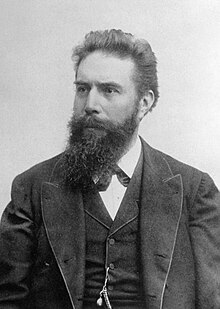
Wilhelm Conrad Röntgen (27 March 1845 – 10 February 1923) was a German physicist, who, on 8 November 1895, produced and detected electromagnetic radiation in a wavelength range today known as X-rays or Röntgen rays, an achievement that earned him the first Nobel Prize in Physics in 1901. His experiments involved the passing of electric current through gases at extremely low pressure. On November 8, 1895 while he was experimenting, he observed that certain rays were emitted during the passing of the current through discharge tube. His experiment that involved working in a totally dark room with a well covered discharge tube resulted in the emission of rays which illuminated a barium platinocyanide covered screen. The screen became fluorescent even though it was placed in the path of the rays, two meters away from discharge tube.


earlier x-rays

He continued his experiments using photographic plate to capture the image of various objects of random thickness placed in the path of the rays. He generated the very first “roentgenogram” by developing the image of his wife’s hand and analyzed the variable transparency as showed by her bones, flesh and her wedding ring. Based on his subsequent research and experiments, he declared that X-ray beams are produced by the impact of cathode rays on material objects.

Saturday, May 12, 2012

Richard Feynman


"Physicists like to think that all you have to do is say, these are the conditions, now what happens next?Richard Feynman [1]


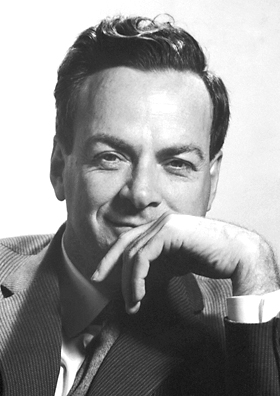
File:Richard Feynman Nobel.jpg


Richard Phillips Feynman (May 11, 1918 – February 15, 1988) was an American physicist known for his work in the path integral formulation of quantum mechanics, the theory of quantum electrodynamics, and the physics of the superfluidity of supercooled liquid helium, as well as in particle physics (he proposed the parton model). For his contributions to the development of quantum electrodynamics, Feynman, jointly with Julian Schwinger and Sin-Itiro Tomonaga, received theNobel Prize in Physics in 1965. He developed a widely used pictorial representation scheme for the mathematical expressions governing the behavior of subatomic particles, which later became known as Feynman diagrams. During his lifetime, Feynman became one of the best-known scientists in the world. In a 1999 poll of 130 leading physicists worldwide by the British journal Physics World he was ranked as one of the ten greatest physicists of all time. [2]
[2] in Wikipedia (12-05-2012)
In this Feynman diagram, an electron and a positronannihilate, producing a photon (represented by the blue wavy line) that becomes a quark-antiquark pair. Then one radiates a gluon (represented by the green spiral).
A playlist from eufisica's channel:

Tuesday, December 27, 2011

Kepler's Birthday

Johannes Kepler (December 27, 1571 – November 15, 1630) is not a name that most people recognize, but if you are aware of the recent discoveries of new planets, will recognize that many new planets bear his name.  Perhaps the best birthday gift we can give to this scientist is Kepler 22b, the first planet discovered in the habitable zone of a star, an earth possible planet like ours.
Kepler is best known for revealing the secrets of planetary motions. His three laws of planetary motion still apply today, and enabled Newton to give us the law of universal gravitation.
In 1596, Kepler published Mysterium Cosmographicum, where he set out arguments for the heliocentric hypothesis.
In 1609 published Astronomia Nova ... From Motibus Stellae Martis, where he presented his three laws of planetary motion that now bear his name:
  • The planets describe elliptical orbits with the sun at one focus.
  • The radius vector connecting the planet to the sun describes equal areas in equal times. (law of areas)
  • The squares of the periods of revolution (T) are proportional to the cubes of mean distances (a) from the Sun to the planets. T2 = k a3, where k is a proportionality constant.
Probably most of us will never use this information in our life, but it does well to remember that those was important intellectual achievements of Western civilization. We could even think to remember Kepler itself and its laws would be enough, but Kepler had more projects, for example, projects of the first glasses for myopia and hyperopia.

Monday, January 26, 2009

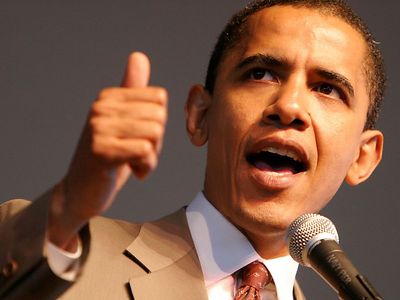
Congratulations Mr. President


image from: http://www.dmiblog.com

A new era of scientists will bring us a hope for climate change and technology. 
I hope President Obama can make a difference. 
The scientific community trust this man. 
Yes We Can.


Featured Post

IBSE about Light Pollution

Here is my presentation that happened in the Discover the Cosmos Conference (Volos, Greece - 2013). The presentation was an Inquiry Base...

Popular Posts