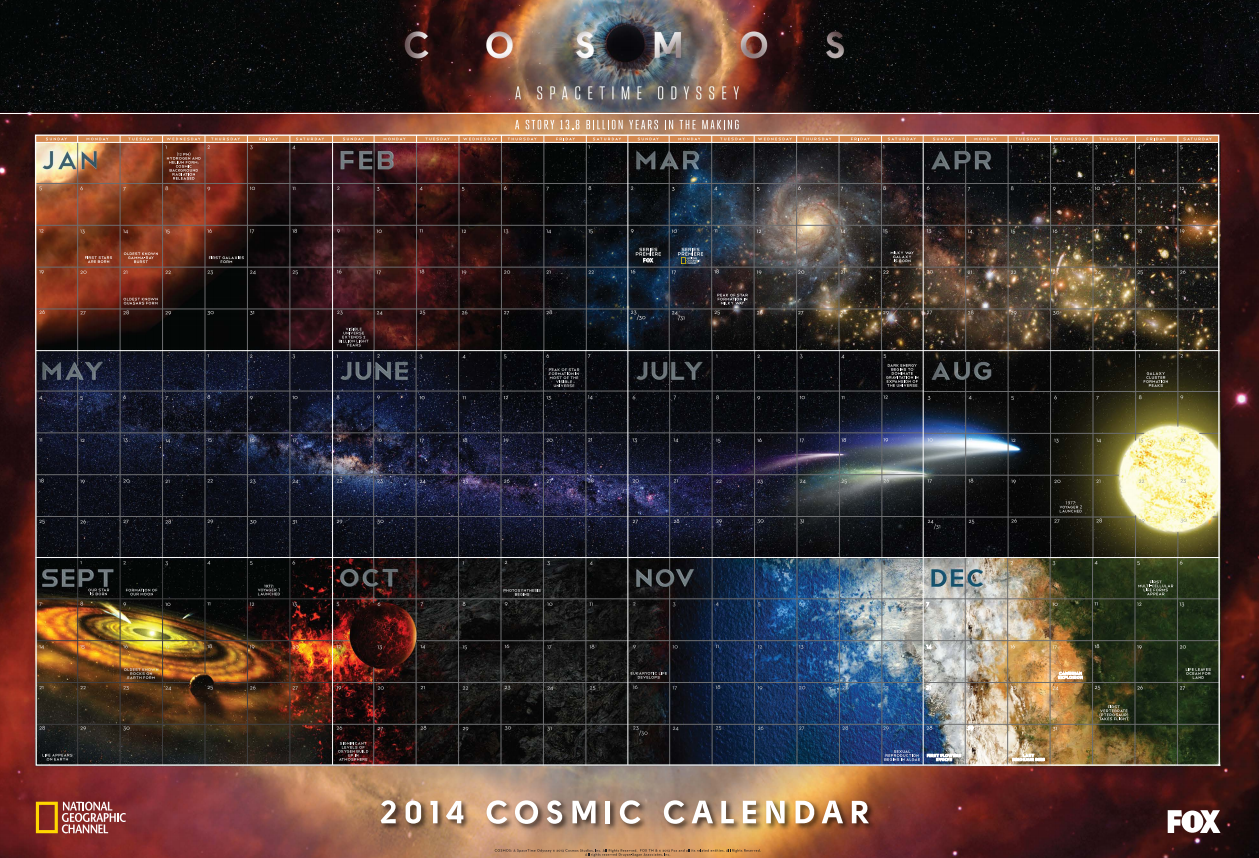
Do you want the COSMOS Calendar?
You can foun it in astroPT website and download it in pdf or png :)

 |
| This Hubble Ultra-Deep Field image of the distant universe contains approximately 10,000 galaxies. Image credit: NASA and the ESA |
 |
Image: Physicists paddle around the Super Kamiokande detector in a rubber raft as it fills with water. The detector was designed to hunt neutrinos and decaying protons, but could catch the signatures of Particle X. Credit: Kamioka Observatory, ICRR (Institute for Cosmic Ray Research),The University of Tokyo. |
“We know you have to have these two ingredients to the universe, both atoms and dark matter,” said physicist Kris Sigurdson of the University of British Columbia, coauthor of a paper describing the new particle.
“If matter and antimatter were created in equal amounts in the early universe, they would all have annihilated [each other],” said theoretical physicist Sean Tulin of the Canadian physics institute TRIUMF. “There has to be some asymmetry that was left over.”
Together with physicists Hooman Davoudiasl at Brookhaven National Lab and David Morrissey of TRIUMF, Tulin and Sigurdson suggest a way to solve the problem of missing antimatter: Hide it away as dark matter. The details are published in the Nov. 19 Physical Review Letters.
The most popular candidate for dark matter is a theoretical weakly interacting massive particle, or WIMP, that connects only with the weak nuclear force and gravity, making it undetectable.
The new theoretical particle “is completely different from the WIMP idea,” Tulin said. The proposed particle, named simply “X,” has a separate antiparticle called “anti-X.” Equal amounts of X and anti-X were created in the Big Bang, and then decayed to lighter particles. Each X decayed into either a neutron or two dark-matter particles, called Y and Φ. Every anti-X converted to an anti-neutron or some anti-dark matter.
But the hypothetical X particle would rather decay into ordinary matter than dark matter, so it produced more neutrons than dark matter. Anti-X preferred decaying into anti-dark matter, and so produced more of it.
After all the particles and anti-particles that could find each other collided and eliminated each other, the universe was left with some extra neutrons and a corresponding number of extra anti-dark matter particles.
“The protons and neutrons can’t annihilate completely with their antiparticles, because there’s not enough to annihilate with,” Tulin said. “The same story happens in the hidden sector as well…. Some dark matter can’t annihilate with anything. So you’re left with some extra dark matter in the universe.”
Conveniently, this picture could explain another particle-physics puzzle: why there is only five times more dark matter than regular matter in the universe. To physicists, five is a really small number. If dark matter and regular matter didn’t spring from similar origins, there’s no reason why there should be roughly the same amount of both of them.
[...]from: WIRED SCIENCE (follow the link for a full reading)


