Follow eufisica

Follow eufisica

Showing posts with label experiments. Show all posts

Friday, June 26, 2026

Eggnaut challenge


Eggnaut protection created with Gemini

One of the students’ favorite challenges is the Eggnaut experiment. In this activity, they use the physics learned in secondary school along with engineering, management, economics, and other skills to create a cost-effective solution to protect the egg.

You can check the "Jupiter" book in python here: Simulations/eggnaut.ipynb at main · eufisica/Simulations

Wednesday, August 11, 2021

Rare trio of particles observed for first time at CERN's ATLAS Experiment

The ATLAS Experiment observed a rare trio of particles.
Check the video:


Tuesday, April 28, 2020

Experiments @Home

In this times of corona virus, we need to stay at home. 
But, that doesn't mean we can't do some experiments.
Here it is a video to perform some experiments at home:

Thursday, October 6, 2016

Friday, September 9, 2016

Eratosthenes Experiment - September 2016

Following last March’s  great success with more than 1000  schools from around the world involved in the activity, ESEA is happy to announce the Eratosthenes Experiment September 2016, which will take place on the 22nd  of September, 2016! Do not miss the opportunity to participate in this fascinating international event!
More info here: http://esea.ea.gr/blog/eratosthenes-experiment-september-2016

Saturday, September 19, 2015

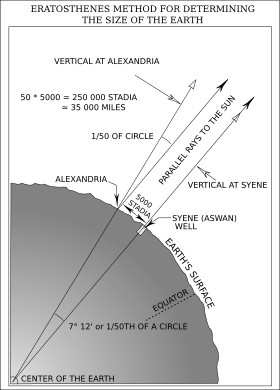
Eratosthenes experiment


Source: wikipedia
On Wednesday, at local noon, each school in different countries will conduct the Eratosthenes experiment.

Eratosthenes  of  Cyrene (276 aC – 195/194 aC) was a Greek mathematician, geographer, poet, astronomer, and music theorist. He was a man of learning, becoming the chief librarian at the Library of Alexandria. He invented the discipline of Geography, including the terminology used today. He is best known for being the first person to calculate the circumference of the Earth, which he did by applying a measuring system using stadia, a standard unit of measure during that time period. His calculation was remarkably accurate. He was also the first to calculate the tilt of the Earth's axis (again with remarkable accuracy).

To conduct the experiment and exchange data with other schools please go to this website: eratosthenes.ea.gr

You can also participate in the photo contest.

Be part of the Galileo Teacher Program (connecting teachers in all countries).

Monday, April 14, 2014

Mini-Spectrometer... how to build

In this post you can find the links to create this foldable mini-spectrometer.
Here is the video with the steps to create one:

And here is my first picture that I took with my smartphone:


Tuesday, March 18, 2014

First direct evidence of cosmic inflation

Credit: BICEP 2014


Researchers working on the Background Imaging of Cosmic Extragalactic Polarization (BICEP2) project at the South Pole announced yesterday the first direct evidence of cosmic inflation with the detection of primordial gravitational waves.


"What they detected is known as primordial B-mode polarization and is important for at least two reasons. It would be the first detection of gravitational waves, which are predicted to exist under Einstein’s theory of relativity but have never before been seen. But the thing that has scientists really excited is that it could provide the first direct evidence for a theorized event called inflation that caused the universe to exponentially grow just a fraction of a fraction of a second after it was born." in wired.com
"Gravitational waves from inflation are interesting for a couple of reasons. First, we know they should be there; gravitation certainly exists, and it’s a massless field. Second, there is a way to disentangle the gravitational waves from the density fluctuations, using thepolarization of the CMB. [...] Finally, how strong the gravitational waves are at different wavelengths reveals a great deal about the details of inflation — including one magic number, the energy density of the universe during the inflationary era." in Sean Carroll website
Here is the abstract of the paper submited to arXiv website:

BICEP2 I: Detection Of B-mode Polarization at Degree Angular Scales

We report results from the BICEP2 experiment, a Cosmic Microwave Background (CMB) polarimeter specifically designed to search for the signal of inflationary gravitational waves in the B-mode power spectrum around l=80. [...] BICEP2 observed from the South Pole for three seasons from 2010 to 2012. A low-foreground region of sky with an effective area of 380 square degrees was observed to a depth of 87 nK-degrees in Stokes Q and U. In this paper we describe the observations, data reduction, maps, simulations and results. We find an excess of B-mode power over the base lensed-LCDM expectation in the range 30<l<150, inconsistent with the null hypothesis at a significance of >5σ. [...] Additionally, cross-correlating BICEP2 against 100 GHz maps from the BICEP1 experiment, the excess signal is confirmed with 3σ significance and its spectral index is found to be consistent with that of the CMB, disfavoring synchrotron or dust at 2.3σ and 2.2σ, respectively. The observed B-mode power spectrum is well-fit by a lensed-LCDM + tensor theoretical model with tensor/scalar ratio r=0.20+0.07−0.05, with r=0 disfavored at 7.0σ. Subtracting the best available estimate for foreground dust modifies the likelihood slightly so that r=0 is disfavored at 5.9σ.
Paper available here: http://arxiv.org/abs/1403.3985

Minute Physics video:

Thursday, February 13, 2014

A step forward to fusion energy

Fusion reactions happens in Sun's core.
Image credit: wikipedia
The ignition is an essential part to make possible a viable alternative source of energy, but has not yet been reached. An important step on the way to the ignition is having the energy generated by fusion reactions, confined to a plasma, exceeds the amount of energy stored in the deuterium-tritium fuel and during the implosion, resulting in a gain of energy. In the article published in Nature, scientists at LAWRENCE LIVERMORE NATIONAL LABORATORY revealed that they acquired energy gains by manipulating the laser to reduce instability in the implosion.
More info: New Observer
Scientific paper: NATURE

Tuesday, January 21, 2014

first-ever beam of antihydrogen atoms

CERN announced that its ASACUSA experiment has produced the world's first-ever beam of antihydrogen atoms. Such beams will make possible a couple of tests that seek to answer one of the biggest questions in physics: Why is there more matter than antimatter?

"The ASACUSA experiment at CERN has succeeded for the first time in producing a beam of antihydrogen atoms. In a paper published today in Nature Communications, the ASACUSA collaboration reports the unambiguous detection of 80 antihydrogen atoms 2.7 metres downstream of their production, where the perturbing influence of the magnetic fields used initially to produce the antiatoms is small. This result is a significant step towards precise hyperfine spectroscopy of antihydrogen atoms." in CERN Press Office

Thursday, July 25, 2013

STOP that light

Crédito: Adrian
Credit: Adrian
The fastest thing in the universe was completely stopped and stored for a minute (new record). In vacuum, light travels about 18 million kilometers, in those 60 seconds - which represents more than 20 trips to the moon and back.
"A minute is a very, very long," says Thomas Krauss, St. Andrews University, UK. "This is really an important milestone."
The exploit could allow secure quantum communications to work at long distances.
As the light typically travels just under 300,000 kilometers per second in a vacuum, physicists  were able to slow it down just to only 17 meters per second in 1999, and two years later, stop it completely, though only by a fraction of a second. Earlier this year, researchers increased this time stopping the light for 16 seconds using cold atoms.
Light Trap
To break the minute barrier, George Heinze and colleagues at the University of Darmstadt, Germany, fired a laser control over an opaque crystal, the atoms leading to a quantum superposition of two states. This made it clear to a small range of frequencies. The Heinze's team then stopped a second laser beam which entered the crystal, turning the first laser off and, consequently, the transparency of that crystal disappeared.
The storage time depends upon the crystal's superposition. A magnetic field extends it, but it complicates the configuration of the control laser. Heinze's team used an algorithm to "generate" the magnets and laser combinations, leading them to trap the light for a minute.
Should still be possible to achieve longer storage of light with other crystals, Heinze says, as they did with the physical limits of this material.
Fonte: newscientist

Solar Flares gives antimatter

NASA’s SOHO spacecraft captured this image of a solar flare as it erupted from the Sun on October 28, 2003 (NASA / SOHO)
Erupção solar captada pela SOHO em 28 de outubro de 2003 (NASA / SOHO)
Associated with solar magnetic storms, solar flares are giant explosions on the sun that send energy, light and particles in all directions to the space. Their number increases approximately every 11 years.
When the universe was formed 13.8 billion years ago in the event known as the Big Bang, there was the same amount of matter and antimatter. Somehow the matter antimatter annihilated (when matter and antimatter meet, they annihilate each other), leaving only a portion of matter, enough to form stars, planets and galaxies that make up our universe.
The study of natural sources of antimatter, will allow researchers to understand why antimatter lost the battle to matter in the beginning of our universe.
Positrons are antiparticles of the antimatter. The positron, e+, and electrons, e-, (populating the common atoms) have the same physical behavior, except that the electrons have a negative charge while the positrons, as its name indicates, have a positive charge. This charge's difference causes that positrons interact differently with electromagnetic fields, which Professor Gregory Fleishman, from the New Jersey Institute of Technology and his colleagues from the Russia's Institute of Solar-Terrestrial Physics used to distinguish them.
The process of solar flares are very energetic and the ejected mass accelerates particles to speeds approaching the speed of light, allowing the creation of these positrons.
Using data from SOHO and radio images of two different frequencies obtained from Japan's Nobeyama Radioheliograph, the Russian-American team found that the light was polarized in different directions for low frequencies, where the ordinary matter dominates, compared to higher frequencies where antimatter is more expected.
"That this kind of antiparticles are created in solar flares is not surprising, but this is the first time that the immediate effects are detected," these results were presented on July 8, at the 44th meeting of Society American Astronomical Society's Solar Physics Division of the Bozeman, Montana.

The study has profound implications for obtaining valuable knowledge through remote sensing antiparticles relativistic starting the Sun and possibly other astrophysical objects through observations of radio telescopes.

Saturday, July 20, 2013

Muon Neutrinos Transform to Electron Neutrinos

Super Kamiokande is the worldʼs largest underground neutrino detector,
and is located 1000 metres underground in Kamioka Mine, Hida, Gifu Precture, Japan.

Credit: Image courtesy of Stony Brook University

Yesterday at the European Physical Society meeting in Stockholm, the international T2K collaboration announced definitive observation of muon neutrino to electron neutrino transformation. In 2011, the collaboration announced the first indication of this process, a new type of neutrino oscillation, then; now with 3.5 times more data this transformation is firmly established. The probability that random statistical fluctuations alone would produce the observed excess of electron neutrinos is less than one in a trillion. Equivalently the new results exclude such possibility at 7.5 sigma level of significance. This T2K observation is the first of its kind in that an explicit appearance of a unique flavor of neutrino at a detection point is unequivocally observed from a different flavor of neutrino at its production point.

Friday, July 19, 2013

Rare particle decay detected at LHC

Protons collide in the CMS detector, producing a Bs particle that 
decays into two muons (red lines) in this event display from 2012 (Image: CMS)
New results to be presented today at the European Physical Society's High Energy Physics conference (EPS-HEP 2013) in Stockholm, Sweden, have put the Standard Model of particle physics to one of its most stringent tests to date. The CMS and LHCbexperiments at CERN’s Large Hadron Collider (LHC) will present measurements of one of the rarest measureable processes in physics: the decay of a Bs (pronounced B-sub-s) particle into two muons.
The new measurements show that only a handful of Bs particles per billion decay into pairs of muons. Because the process is so rare, it is an extremely sensitive probe for new physics beyond the Standard Model. Any divergence from the Standard Model prediction would be a clear sign of something new.
Both experiments will present results to a very high level of statistical significance (over 4 sigma for each experiment). These results are in good agreement with the Standard Model.
Font: CERN
Read more:
"A very rare decay has been seen by CMS" - CMS collaboration 

Tuesday, June 18, 2013

Flames in the ISS

Candle Flames in Microgravity

Microgravity experiments using drop towers and Space Shuttle Orbiters have provided scientists valuable insights on how things burn. In the typical experiment, a flammable material, such as a candle, is ignited by a hot wire. 
The picture illustrate a combustion experiment conducted at the NASA Lewis Research Center 132 Meter Drop Tower. These pictures of a candle Candle Flames in Microgravity flame. As the picture illustrate, the flame stabilized, and its shape appears to be constant throughout the remainder of the drop. Instead of the typical teardrop shape seen on Earth, the microgravity flames becomes spherical. On Earth, the flame is drawn into a tip by the rising hot gases. However, convection currents are greatly reduced in microgravity. Fresh oxygen is not being delivered to the candle by these currents. Instead, oxygen works it way slowly to the flame by the process of diffusion. Soon, the flame temperature begins to drop because the combustion is less vigorous. The lower temperature slows down the melting and vaporization of the candle wax. Candles onboard the first United States Microgravity Laboratory, launched in June 1992, burned from 45 seconds to about 1 minute before being extinguished because of the dropping temperature and reduction of wax vapor.
From: NASA


Combustion, Complex Fluids, and Fluid Physics Experiments on the ISS
Motil, Brian; Urban, David
(NASA Glenn Research Center; Cleveland, OH, United States)

Abstract

From the very first days of human spaceflight, NASA has been conducting experiments in space to understand the effect of weightlessness on physical and chemically reacting systems. NASA Glenn Research Center (GRC) in Cleveland, Ohio has been at the forefront of this research looking at both fundamental studies in microgravity as well as experiments targeted at reducing the risks to long duration human missions to the moon, Mars, and beyond. In the current International Space Station (ISS) era, we now have an orbiting laboratory that provides the highly desired condition of long-duration microgravity. This allows continuous and interactive research similar to Earth-based laboratories. Because of these capabilities, the ISS is an indispensible laboratory for low gravity research. NASA GRC has been actively involved in developing and operating facilities and experiments on the ISS since the beginning of a permanent human presence on November 2, 2000. As the lead Center both Combustion, Fluid Physics, and Acceleration Measurement GRC has led the successful implementation of an Acceleration Measurement systems, the Combustion Integrated Rack (CIR), the Fluids Integrated Rack (FIR) as well as the continued use of other facilities on the ISS. These facilities have supported combustion experiments in fundamental droplet combustion fire detection fire extinguishment soot phenomena flame liftoff and stability and material flammability. The fluids experiments have studied capillary flow magneto-rheological fluids colloidal systems extensional rheology pool and nucleate boiling phenomena. In this paper, we provide an overview of the experiments conducted on the ISS over the past 12 years. We also provide a look to the future development. Experiments presented in combustion include areas such as droplet combustion, gaseous diffusion flames, solid fuels, premixed flame studies, fire safety, and super critical oxidation processes. In fluid physics, experiments are discussed in multiphase flows, capillary phenomena, and heat pipes. Finally in complex fluids, experiments in rheology and soft condensed materials will be presented.


Wednesday, January 30, 2013

How to Make a Simplest Motor


An electric motor is an electromechanical device that converts electrical energy into mechanical energy.
Most electric motors operate through the interaction of magnetic fields and current-carrying conductors to generate force. The reverse process, producing electrical energy from mechanical energy, is done by generators such as an alternator or a dynamo; some electric motors can also be used as generators, for example, a traction motor on a vehicle may perform both tasks. Electric motors and generators are commonly referred to as electric machines. (Wikipedia)


Do you want to build one? You can learn how to. Just read this paper.
You can find more information about electric motors here.

Friday, July 6, 2012

HST2012, CERN - Day 6

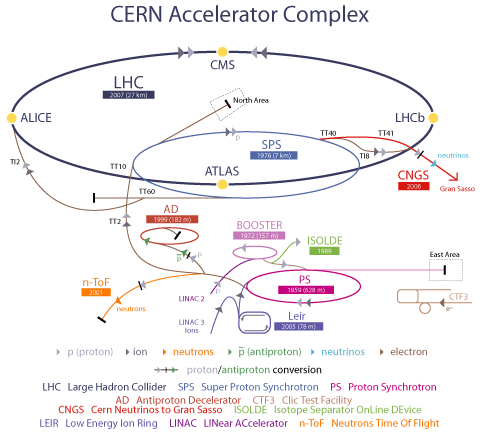
CERN Accelerator ComplexIn this day we had two lectures. One lecture was about the latest discoveries (top quark, bottom quark and tau neutrino); the second lecture was about the Principle of Uncertainty. I don't want to bored you with this stuff. So lets talk about our first visit: LINAC 2. We went to the restricted area with radiation control and watch the place where Physics started. Everything started with a tiny Hydrogen bottle. The H2 goes to a chamber where the electrons are retain and protons are "synchronized". After that the protons are injected to a linear accelerator and goes to LEIR. Look here:


Featured Post

IBSE about Light Pollution

Here is my presentation that happened in the Discover the Cosmos Conference (Volos, Greece - 2013). The presentation was an Inquiry Base...

Popular Posts