Follow eufisica

Follow eufisica

Showing posts with label 2014. Show all posts

Friday, November 21, 2014

two new particles


"Today the collaboration for the LHCb experiment at CERN1’s Large Hadron Collider announced the discovery of two new particles in the baryon family. The particles, known as the Xi_b'- and Xi_b*-, were predicted to exist by the quark model but had never been seen before. A related particle, the Xi_b*0, was found by the CMS experiment at CERN in 2012. The LHCb collaboration submitted a paper reporting the finding to Physical Review Letters." Source: CERN

Read more:

Wednesday, November 12, 2014

Philae landing

Philae landing confirmation expected at 16:00 UTC.

Watch live:

Monday, November 10, 2014

Rosetta live online

Wednesday you can follow the online emission here: http://www.opendiscoveryspace.eu/news/rosetta-rendezuous-comet-697664
It will be a very important day, Philae will be landind on comet 67P/Churyumov–GerasimenkoThe lander is expected to achieve the first controlled touchdown on a comet nucleus. Its instruments should obtain the first images from a comet's surface and make the first in situ analysis to find out what it is made of.

Image credit: ESA


Monday, November 3, 2014

Quantum Numbers

Quantum numbers describe values of conserved quantities in the dynamics of a quantum system. In the case of quantum numbers of electrons, they can be defined as "The sets of numerical values which give acceptable solutions to theSchrödinger wave equation for the Hydrogen atom". Perhaps the most important aspect of quantum mechanics is thequantization of observable quantities, since quantum numbers are discrete sets of integers or half-integers, although they could approach infinity in some cases. This is distinguished from classical mechanics where the values can range continuously. Quantum numbers often describe specifically the energy levels of electrons in atoms, but other possibilities include angular momentumspin, etc. Any quantum system can have one or more quantum numbers; it is thus difficult to list all possible quantum numbers.
There are four quantum numbers which can describe the electron completely.
The principal quantum number (n) describes the electron shell, or energy level, of an atom. The value of n ranges from 1 to the shell containing the outermost electron of that atom.
The azimuthal quantum number () (also known as the angular quantum number or orbital quantum number) describes the subshell, and gives the magnitude of the orbital angular momentum.
The magnetic quantum number (m) describes the specific orbital (or "cloud") within that subshell, and yields the projection of the orbital angular momentum along a specified axis.
The spin projection quantum number (ms) describes the spin (intrinsic angular momentum) of the electron within that orbital, and gives the projection of the spin angular momentum S along the specified axis. An electron has spin s = ½, consequently ms will be ±½, corresponding with "spin" and "opposite spin." Each electron in any individual orbital must have different spins because of the Pauli exclusion principle, therefore an orbital never contains more than two electrons.
NameSymbolOrbital meaningRange of valuesValue examples
principal quantum numbernshell1 ≤ nn = 1, 2, 3, …
azimuthal quantum number (angular momentum)subshell (s orbital is listed as 0, p orbital as 1 etc.)0 ≤  ≤ n − 1for n = 3:
 = 0, 1, 2 (s, p, d)
magnetic quantum number, (projection ofangular momentum)menergy shift (orientation of the subshell's shape) ≤ m ≤ for  = 2:
m = −2, −1, 0, 1, 2
spin projection quantum numbermsspin of the electron (−½ = "spin down", ½ = "spin up")s ≤ ms ≤ sfor an electron s = ½,
so ms = −½, ½


Tuesday, August 19, 2014

Red Filter Glasses


Enjoying this summer...
Now I made another tool to teach light and color in my Physics class.
Take a look:

Monday, July 28, 2014

Andromeda's Galaxy

After a whole year of work (really hard this one), now is time to rest and relax.
So, yesterday I went with some friends to Serra do Alvão, Vila Real (Portugal), and we started to watch the night sky and some astronomical objects with telescopes.
I don't have a telescope. So, I took some pictures and, for the first time, I captured Andromeda's Galaxy.
The result is three pictures combined as one.

Have a nice summer time.

Monday, June 30, 2014

Gravitational potential and speed of light

Supernova
Remnant of Supernova 1987A seen in light of very different wavelengths. ALMA data (in red) shows newly formed dust in the centre of the remnant. Hubble (in green) and Chandra (in blue) data show the expanding shock wave. Credit: ALMA/NASA

(Phys.org) —Physicist James Franson of the University of Maryland has captured the attention of the physics community by posting an article to the peer-reviewed New Journal of Physics in which he claims to have found evidence that suggests the speed of light as described by the theory of general relativity, is actually slower than has been thought.

Read more at: http://phys.org/news/2014-06-physicist-slower-thought.html#jCp


The paper is available in IOP website.

Saturday, June 7, 2014

Astronomy Education Alliance Meeting 2014


The Astronomy Education Alliance Meeting will take place in Cascais, Portugal between 8 and 12 September 2014, and co-hosted by the European Planetary Science Congress and Global Hands-on Universe. This meeting will showcase and discuss the latest innovative efforts in astronomy education, allowing teachers, educators and outreach professionals to combine efforts and focus astronomy resource production on cross cultural curricula utilizing formal education best practices.
For more information and registration go here: http://handsonuniverse.org/astroeducation/

Tuesday, May 13, 2014

Refraction of Light

Here is some photos taken at class to teach light's refraction.


To learn more about this topic try to find refraction in the search option.
You can also play with this PhET simulation:

Bending Light
Click to Run

Monday, April 14, 2014

Mini-Spectrometer... how to build

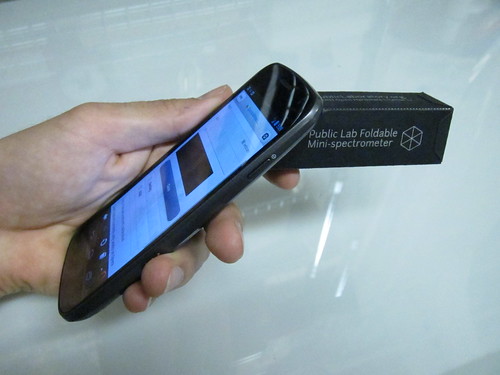
In this post you can find the links to create this foldable mini-spectrometer.
Here is the video with the steps to create one:

And here is my first picture that I took with my smartphone:


Sunday, April 13, 2014

Daily Physics News 04/13/2014

Posted from Diigo. The rest of my favorite links are here.

Saturday, April 12, 2014

Astronomy Education Alliance Meeting

A message from my friend Rosa Doran:

"Book these dates in your callendar:

September 1st to 5th - GTTP international training

September 8th to 12th - GHOU2014 / Astronomy Education Alliance Meeting

This year our anual meeting (Global Hands-on Universe 2014) will take place in Portugal. This time the meeting is in partnership with some major events. The event will take place in parallel with the Europlanet Science Congress 2014 and in the framework of a major Astronomy Education event: The Astronomy Education Alliance Meeting. The aim is to set the stage to discuss the latest innovative efforts in astronomy education, allowing teachers, educators and outreach professionals to combine efforts and focus astronomy resource production on cross cultural curricula utilizing formal education best practices. 

You can find all information regarding the meeting here: http://handsonuniverse.org/astroeducation/

As already is our tradition we will be hosting during the week before this major event, the GTTP international training. There are special conditions for people willing to attend this training session. All the information can be found here: http://gttp.ea.gr

We hope that you will join us in this event. We promise this will be an unforgetable experience in sunny Portugal. Some nice surprises are here waiting for you. Please join and spread the word."

I hope you can join us :)

Friday, April 4, 2014

Crookes' work

A Crookes Tube. Credit: Wikipedia
Crookes made a career of being a meteorologist and lecturer at multiple places. Crookes worked in both the fields of chemistry and physics. The salient characteristic of his work was the originality of the conception of his experiments, and his skill in their execution.
His work on electricity in high vacuum, leads us to cathode rays tubes (the technology behind the creation of television).The Crookes tube is an early experimental electrical discharge tube, with partial vacuum, in which cathode rays, streams of electrons, were discovered. The Crookes tube consists of a partially evacuated glass container of various shapes, with two metal electrodes, the cathode and the anode, one at either end. When a high voltage is applied between the electrodes, cathode rays (electrons) are projected in straight lines from the cathode. It was used by Crookes, Johann Hittorf, Julius Plücker, Eugen Goldstein, Heinrich Hertz, Philipp Lenard and others to discover the properties of cathode rays, culminating in J.J. Thomson's 1897 identification of cathode rays as negatively charged particles, which were later named electrons
Crookes tubes are now used only for demonstrating cathode rays.

Crookes radiometer in action. Credit: wikipedia
Another interesting apparatus is the Crookes radiometer, consists of an airtight glass bulb, containing a partial vacuum. Inside are a set of vanes which are mounted on a spindle. The vanes rotate when exposed to light, with faster rotation for more intense light, providing a quantitative measurement of electromagnetic radiation intensity. Today the device is mainly used in physics education as a demonstration of a heat engine run by light energy. 


It is still manufactured and sold as an educational aid or curiosity.
The radiometer is made from a glass bulb from which much of the air has been removed to form a partial vacuum. Inside the bulb, on a low friction spindle, is a rotor with several (usually four) vertical lightweight metal vanes spaced equally around the axis.
The vanes are:
  • polished or white on one side,
  • black on the other.
When exposed to sunlight, artificial light, or infrared radiation (even the heat of a hand nearby can be enough), the vanes turn with no apparent motive power, the dark sides retreating from the radiation source and the light sides advancing.
Cooling the radiometer causes rotation in the opposite direction.
To know more see radiation pressure.
Fonts:
Videos about radiation pressure:

Monday, March 31, 2014

Mini-Spectrometer

Public Lab Origami Spectrometer

In a earlier post, I published how to build a spectrometer with house stuff. Now, a Physics teacher (friend of mine) show me this great website that show us how to build a mini-spectrometer. You can attach to an smartphone, laptop, or computer with a camera and submit your image to http://spectralworkbench.org/ (point your browser to the website and click "capture").

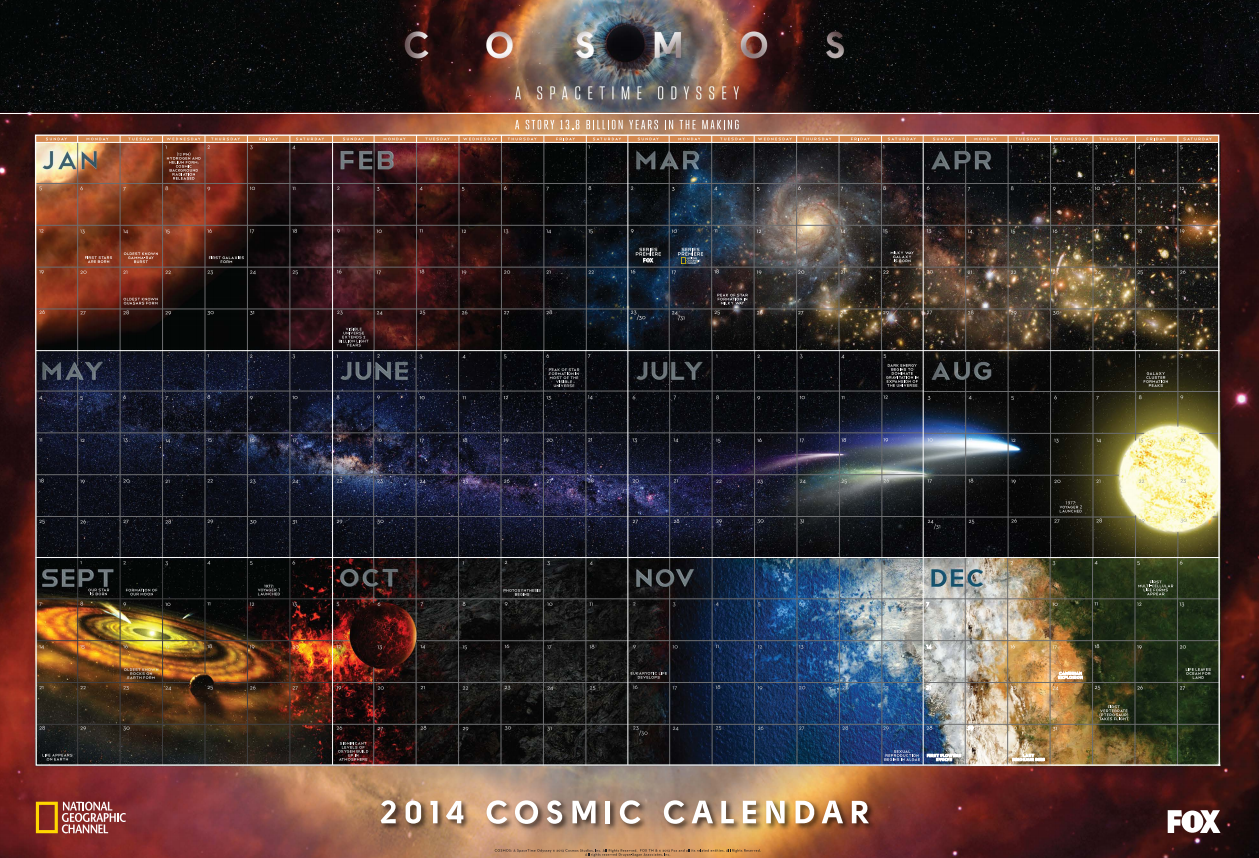
Cosmos Calendar

Do you want the COSMOS Calendar?
You can foun it in astroPT website and download it in pdf or png :)
Screen-Shot-2014-03-11-at-12.07.02-AM

Featured Post

IBSE about Light Pollution

Here is my presentation that happened in the Discover the Cosmos Conference (Volos, Greece - 2013). The presentation was an Inquiry Base...

Popular Posts